
The first night Milo wore it he was two weeks old, eight pounds even, and I had been awake for most of the previous three days. I remember standing over the changing table at 3 a.m. reading the tag on the collar for the fourth time, because I could not believe that a piece of cotton with the arms sewn upward would end a fight that a blanket had lost in ninety seconds the week before. It did not make him sleep through the night. Nothing does that. It made the fight shorter, and at two weeks in, shorter was the entire thing.
So here is the honest shape of this review. My husband Nate and I bought two identical Small Love to Dream Swaddle UPs in January, three weeks before Milo was born, in the same single Amazon order as the monitor, the sound machine and the blind. We used them for nights and naps from late February until mid May. Then I stopped, on purpose, inside one week, and I want to walk through why, because the stopping is not the product failing. It is the product working for exactly as long as it is built to work.
The Quick Verdict
Eleven of the most useful weeks of baby gear we owned, with a hard stop built in that nobody puts on the front of the box.
Amazon Check Today's Price →Eight to thirteen pounds. That is the whole window.
If your baby is inside that range right now, this is the first thing I would buy, ahead of the monitor, the sound machine and the blind. Two of them, so one is always dry.
Amazon Check Today's Price on Amazon →How I've Used It
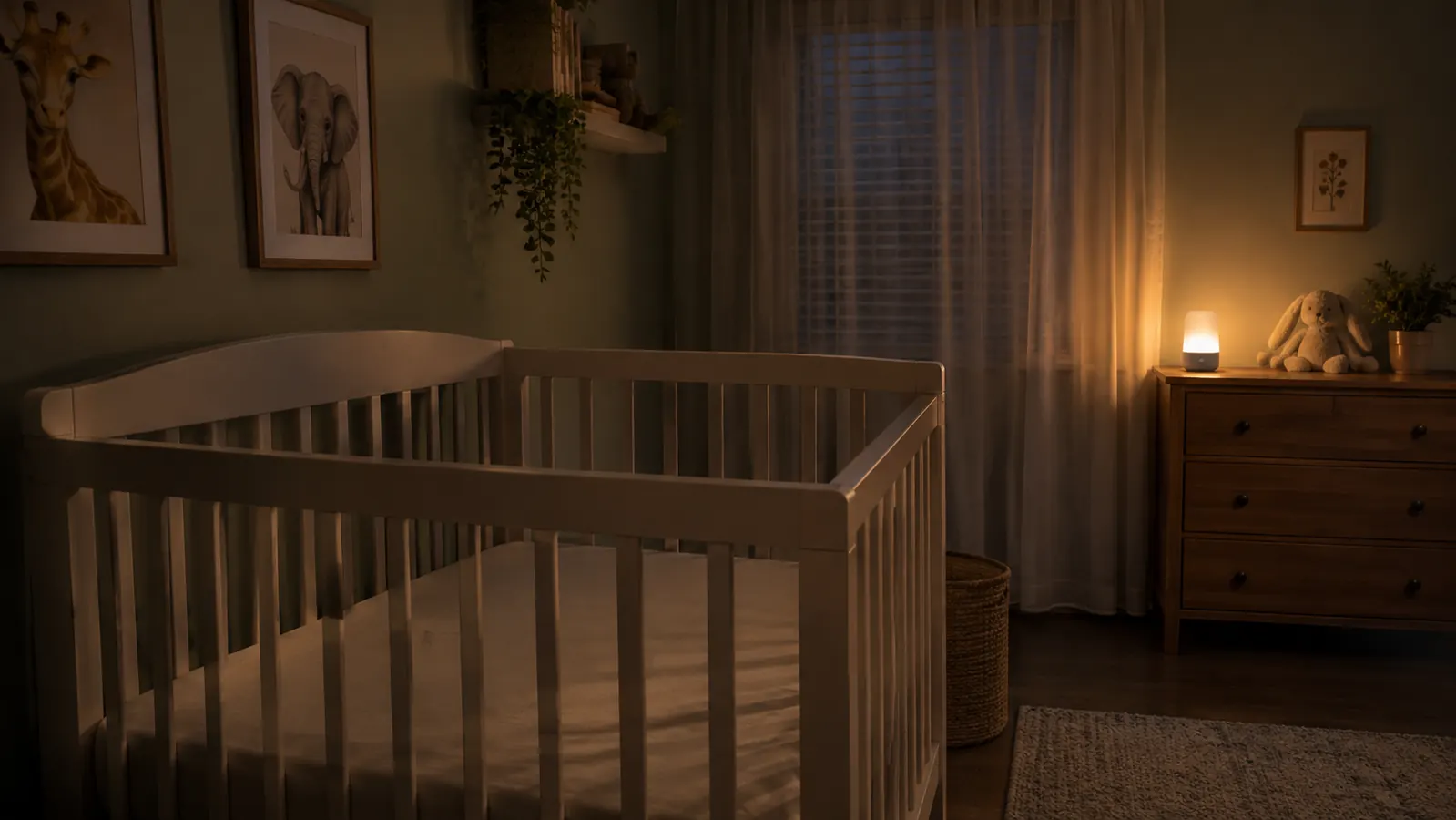
Milo was born on February 10 at 7 pounds 6 ounces. He crossed 8 pounds at his two week check, which is the bottom of the Small size, so his first night in the Love to Dream Swaddle UP was in late February, in the bassinet beside our bed, on his back, on a firm flat mattress, with nothing else in it. That is how he slept every night until he was six months old and moved across the hall into the crib in mid August. Naps happened in the nursery crib from about two weeks old, and the swaddle went with him for those too.
Eleven weeks. That is the number I would put on the box. Late February to mid May, nights and naps, two of them in rotation so one was always clean. I washed them every other day, machine wash, which is what the care instructions say, and I am not gentle with laundry. Eleven weeks of that and the fabric still looked like it had come out of the package the morning I folded them away.
It is not in use now. It has not been in use since mid May. If you are reading this in the fall and wondering whether a nine month old is still zipped into one, the answer for us is no, and the reason is not wear and tear. Keep reading and I will get to it.
What the Arms Up Design Actually Does
A traditional blanket swaddle pins the arms down at the sides. A nurse showed us how to do that once, in the delivery room, and I tried it at home for exactly one night in February. It came loose. I never put a loose blanket in the crib or the bassinet again, and I would say the same thing to any parent: a swaddle that comes undone at 2 a.m. is a hazard, not a sleep tool. Safe sleep guidance is not flexible about that, and it should not be.
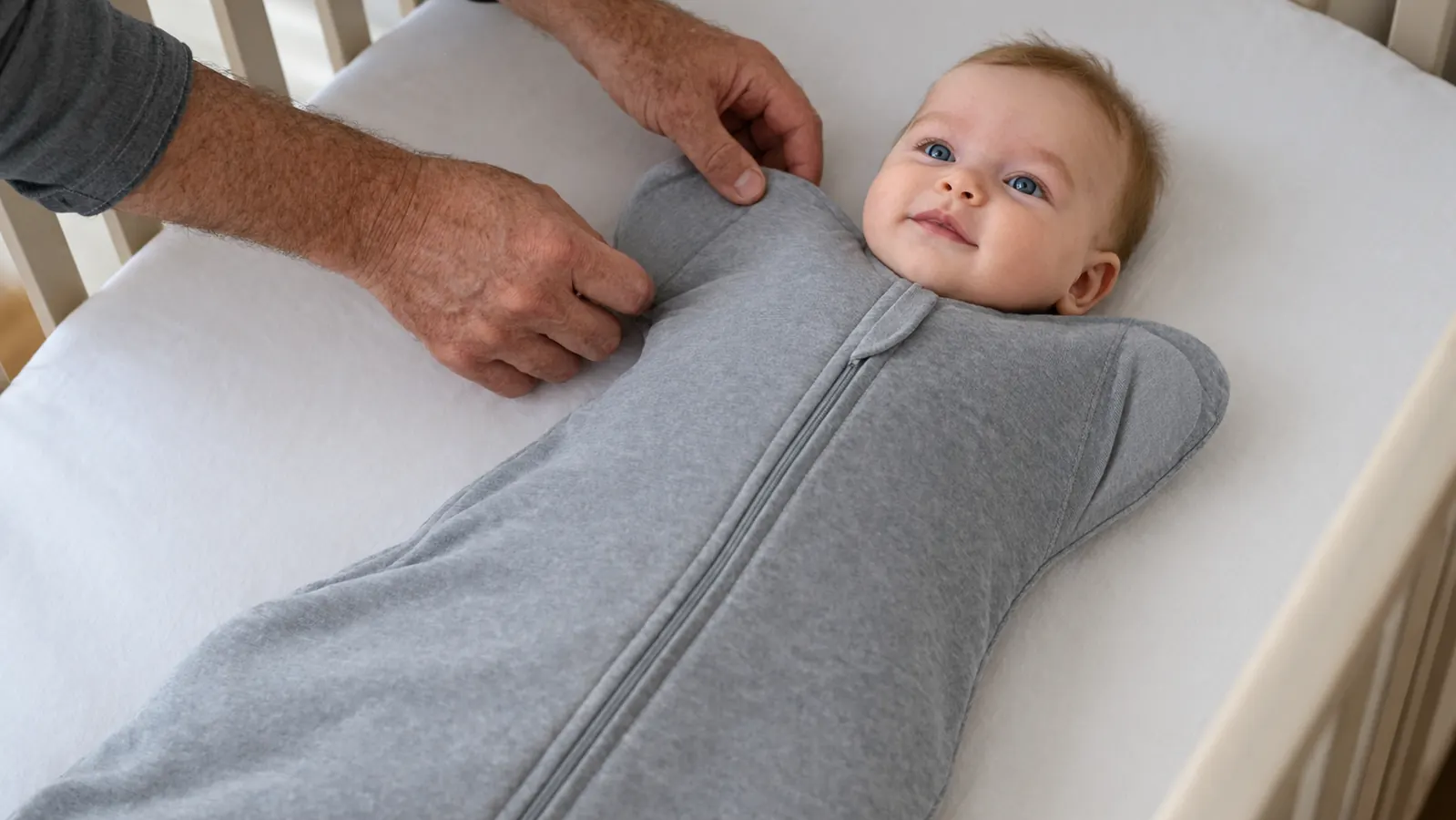
The Love to Dream Swaddle UP goes the other way. The arms are not pinned. The fabric holds them bent up near the face, so his hands were already where his mouth was when he stirred. Whether that teaches a baby to settle himself is between that baby and his own temperament, and I am not going to promise you anything on his behalf. What I can tell you is what I watched in the dark: he would fuss, get a hand to his cheek, and go quiet. In the blanket swaddle he would fuss, his arms would come free, and he would be fully awake and furious.
The other thing that sold me is smaller and more practical. It is one piece. No folding, no tucking, no three corner fold while a newborn screams on the table. You lay him on it, you zip, you are done, and it takes about the length of one breath.
The two way zipper deserves its own paragraph, because I did not understand it from the listing photos at all. There is a pull at the top near the collar and a pull at the bottom near the feet, and the bottom one opens upward from the hem. So at 3 a.m., when the diaper has gone sideways, I unzipped from the bottom, lifted his legs, changed him, zipped it back, and never uncovered his chest or his arms. Fifteen seconds, maybe twenty if it was a two wipe situation. Compare that to the blanket, where a change meant unwrapping the entire thing and starting over with a baby who is now wide awake and cold. Compare it to a front zip sack, where you are pulling a zipper past his face in the dark and hoping. Small detail. It was not a small detail in March.
Warmth, Room Temperature, and the 1.0 TOG Rating
The 1.0 TOG rating is meant for rooms between 68 and 75 degrees Fahrenheit. Our nursery sits around 70 in the winter and creeps toward 76 in July, and in those last warm weeks before I stopped using it, I noticed the difference. The fabric is 93 percent cotton and 7 percent elastane, a lightweight knit, and it does not breathe like the thin pajamas you would pick for a heat wave.
So we layered. A short sleeve bodysuit underneath in February. Nothing but a diaper underneath by April. That is the whole job with a TOG rating, and it is worth saying plainly because the tag does not do the thinking for you.
One night in the middle of April stands out. The furnace had been running all evening because it had been a cold week, and the nursery was sitting at about 76 by the time I put him down. He fussed for nearly twenty minutes, which was not like him in that swaddle, and when I finally picked him up the back of his neck was damp. I took the bodysuit off, put him back in with just a diaper underneath, and he settled in about four minutes. That was the night I started checking the thermostat in the hall before I checked the baby.
What surprised me is how well the fabric held up through all of it. I washed both of them every other day on a normal cycle and dried them on low, and by mid May they were still soft and still the same size, which is more than I can say for the cotton bodysuits he wore underneath. No pilling along the seams, no thinning at the elbows where he pushed against the fabric. For a knit that thin, I expected it to give out. It did not.
The other side of warmth is this: a swaddle is not a blanket your baby can kick off, which is the point of it, and also the risk of it. If your baby runs hot, or your house runs hot, the Love to Dream Swaddle UP will hold that heat against him in a way a loose blanket never would. Check the back of the neck. That is the guidance our pediatrician, Dr. Bell, gave us and it is the only temperature advice I will pass along.
The Sizing Is by Weight, and That Is the Whole Game
Small fits 8 to 13 pounds and up to 25 inches. That is not a suggestion, it is the spec, and it decides everything about how long this works for you. Milo was 8 pounds at two weeks and past 13 pounds by mid May, and there was a stretch in early May where I was wrestling him into a swaddle that had gotten tight across the shoulders before I actually registered why he was fighting it.
At his two month check in April he weighed 11 pounds 4 ounces, which put him comfortably inside the Small and climbing fast. I remember sitting in the parking lot afterward doing the arithmetic on my phone, working out how many weeks we had left before 13 pounds, and getting a number in the fives. That is what this product is, and I do not think it is a bad thing, but you should know it going in. You are counting down from the day you open the package.
What made it hard to see was that he never refused the swaddle outright. He just started taking longer to settle and waking at the one hour mark instead of the three hour mark, and I spent four nights blaming a growth spurt before I laid the thing flat on the bed next to a tape measure and saw how much of the shoulder seam he was filling. Eleven pounds thirteen ounces on our kitchen scale that morning. A pound from the top. I felt ridiculous and also relieved, because it was a fixable problem and it had a label on it.
The real failure mode with this product is not that it breaks. It is that you keep using it two weeks past the point where it fits, because it is the only thing that has been working, and you are tired, and stopping means solving a new problem. Do not do that. Weigh the baby at the checkup, read the tag, and be honest with yourself about the number. This is gear with a shelf life measured in weeks.
Two is the right number. One on him, one in the wash, because a newborn generates laundry at a rate that suggests a much larger household. I would not have made it through eleven weeks with one, and I would not recommend trying.
The Week He Started Rolling, and How We Stopped
At about thirteen weeks, in mid May, I set him down for a nap and he got a shoulder up and tipped a quarter of the way over. That was it. That was the signal. You stop swaddling at the first signs of rolling. I am not making that rule up, it is the one thing every nurse, every pediatrician and every safe sleep page says in almost the same words, and it is not negotiable because the swaddle has been working.
So we stopped that week, cold, nights and naps both, and he went into a plain sleeveless cotton sleep sack with no brand on it, which I am not reviewing and which is not interesting. The first three days were rough. I am not going to pretend the transition was seamless. He had eleven weeks of his arms being held in a shape he liked and then, one Tuesday, he did not.
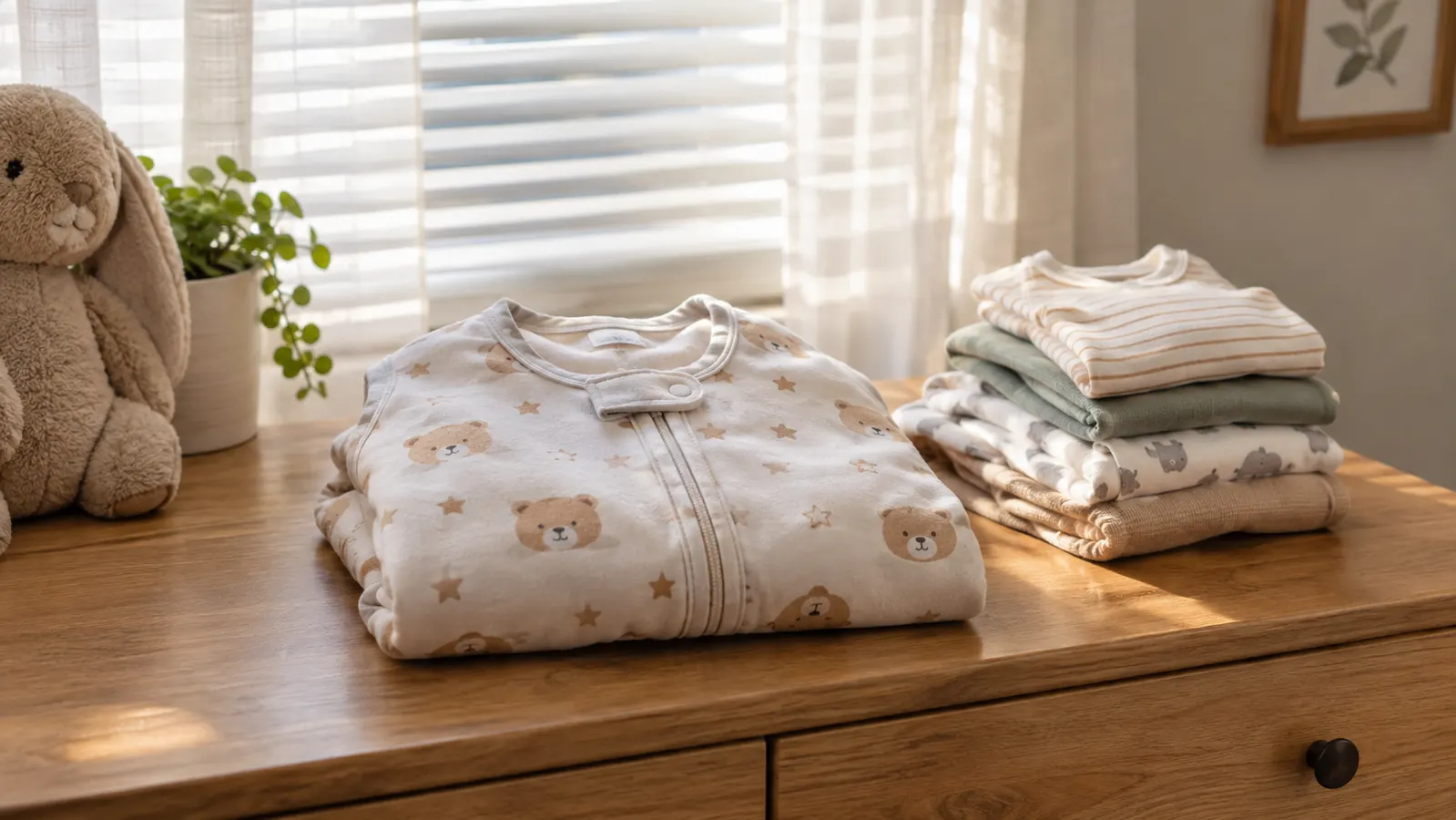
What I actually did that week, because I think the practical part is more useful than the feelings part: I moved both swaddles from the top drawer of the dresser to the bottom one, so I could not reach for one at 2 a.m. out of pure habit. That sounds dramatic. It is the only way I trust myself when I have been up twice already. Then I bought two sleeveless sleep sacks in the next size up, washed them that afternoon, and put one on him that night. He slept in stretches of about two hours for three nights, then a four hour stretch on the fourth, then back to two, then four again. By the end of the second week the shape of the night looked roughly like it had before. Roughly. Not the same, and I would not tell you it was.
I cried a little, which is not a product review point, but it is true. The thing I keep coming back to with the Love to Dream Swaddle UP is that the short useful life is not a flaw you find out about later. It is the design. You are buying a solution to a phase that ends on its own, and the better job the product does, the more it stings when the phase is over.
What I Liked
- Arms up design meant no bedtime fight and no loose blanket anywhere near the crib
- Two way zipper made a 3 a.m. diaper change a fifteen second job without uncovering his top half
- Machine washable, and eleven weeks of every other day washing left the fabric looking new
- One piece, on in seconds, no folding or tucking on a screaming newborn
- Lightweight 93 percent cotton knit, soft against the skin, comfortable in a 70 degree room
Where It Falls Short
- Sizing is by weight, so our useful window was about eleven weeks
- Runs warm in a room above 75 degrees, and we had to strip the layers back in spring
- The zipper sits near the chin and needs care when you close it on a wriggling baby
- It has to stop at the first sign of rolling, whether you are ready or not
- You will want two, which means buying twice at once
Eight pounds at two weeks. Past thirteen pounds and a quarter roll at eleven weeks. That is the whole product, start to finish.
Who This Is For
This is for the parent of a newborn who is somewhere between 8 and 13 pounds, who has already lost a night to a blanket that came loose, and who wants one piece of fabric to deal with at 3 a.m. instead of a folding procedure. It is for the parent who is fine with a product that solves a problem for about three months and then hands the problem back. It is also, honestly, for the parent who is nervous about loose bedding in a crib, because this removes that variable entirely while it fits. Order two, in the size that matches the weight on the scale this week, and keep the baby on his back on a firm flat surface with nothing else in the crib. That part does not change no matter what you buy.
Who Should Skip It
Skip it if your baby is already past the top of the size range, because you would be buying a swaddle you cannot use. Skip it if your house runs hot and you cannot get the room under 75 degrees, because you will spend the whole time worrying about the heat instead of sleeping. Skip it if your baby has already shown signs of rolling, and skip it the moment he does, full stop. And skip it if you want one purchase that covers the first year, because this is not that and it was never going to be. It is a good product for a narrow window, and the window is the point.
Buy it for the eleven weeks, not for the year.
One in the size that matches this week's weight, one clean in the drawer, and a plan for the week the shoulder comes up.
Amazon Check Today's Price on Amazon →