
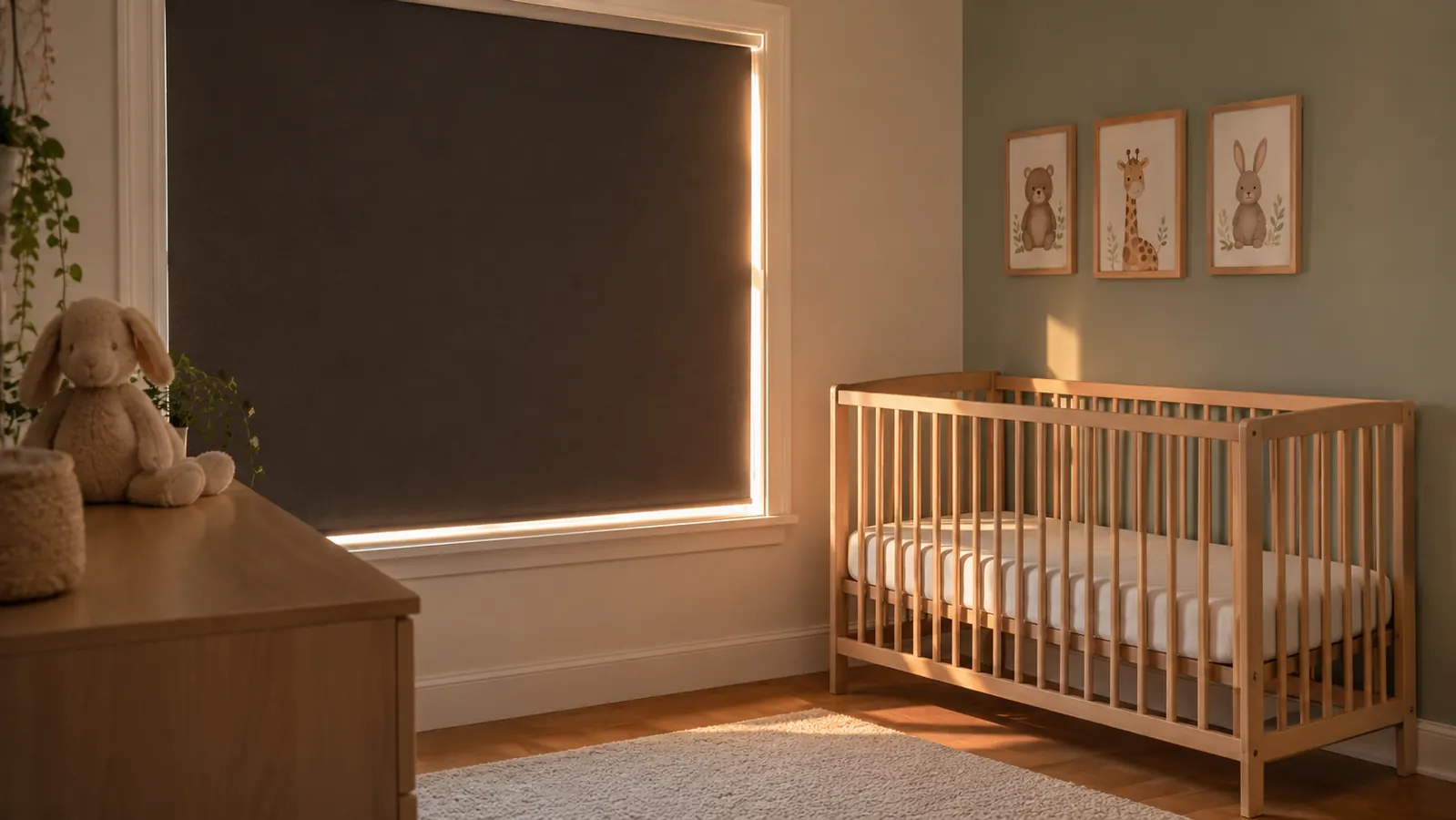
Short answer first: the Tommee Tippee Sleeptime Portable Blackout Blind is what is on the window in our nursery, and it has been there since the week before my son was born. If I were furnishing that room from scratch and I cared how it looked, I would buy blackout curtains. Those are two different jobs, and most nursery checklists fold them into one line as if you have to pick a side. One is a light problem solver. The other is a light problem solver that also decorates, and how much the decorating matters is the only question you actually have to answer.
My son Milo is nine months old. We live in an old two story house in Dayton, Ohio, and his nursery has one east facing window that takes hard morning sun. I have used this blind every day for about nine months and taken it down exactly twice. I have never owned blackout curtains, and I have never tested a competing blind. Everything I say about curtains below comes from published listings and from standing in a friend's nursery with my hands in the fabric, and I will flag that every time it matters. Where I have not lived with something, I say so.
Blind vs Curtains at a Glance
Here is the whole comparison in one table. Some rows go to the curtains, because the curtains genuinely win them, and I have marked those honestly instead of pretending the blind takes everything.
| Tommee Tippee Blackout Blind | Blackout Curtains | |
|---|---|---|
| Where the darkness comes from | Fabric sits flat on the window frame, so it covers the source of the light, corner to corner | Panels hang beside the window, and light still comes around the rod ends and down the sides |
| Fit on an awkward window | The fastenings adjust, up to a window about 51 by 78 inches | You buy a standard panel width and hope it overlaps the frame on both sides |
| Getting it up | Wet the suction cups, press, adjust the fastenings, a few minutes, no tools | Rod, brackets, a drill or a tension rod, then hang and steam out the creases |
| Travel | Folds into the travel bag at about 11 by 9 by 2.4 inches | Not a thing you pack |
| How the room looks | Plain and flat. It reads as a blackout blind and nothing else | Fabric, colour and drape you choose, and it looks like part of the room |
| Using the room in the day | The room stays dark while it is up, so play happens downstairs | Pull them open and the nursery is a room again |
| Keeping it clean | Machine washable, then wet the cups and press it back up | Machine washable with the rest of the laundry, then rehang and hope the hems fall |
| What it costs to cover the window | One item, no rod, no brackets, no drilling | Panels, a rod, brackets, and often a liner behind them |
| Best for | Renters, travel, and an east window that blasts a crib at 7 a.m. | A nursery you plan to stay in, where the room has to look finished |
Where Tommee Tippee Wins
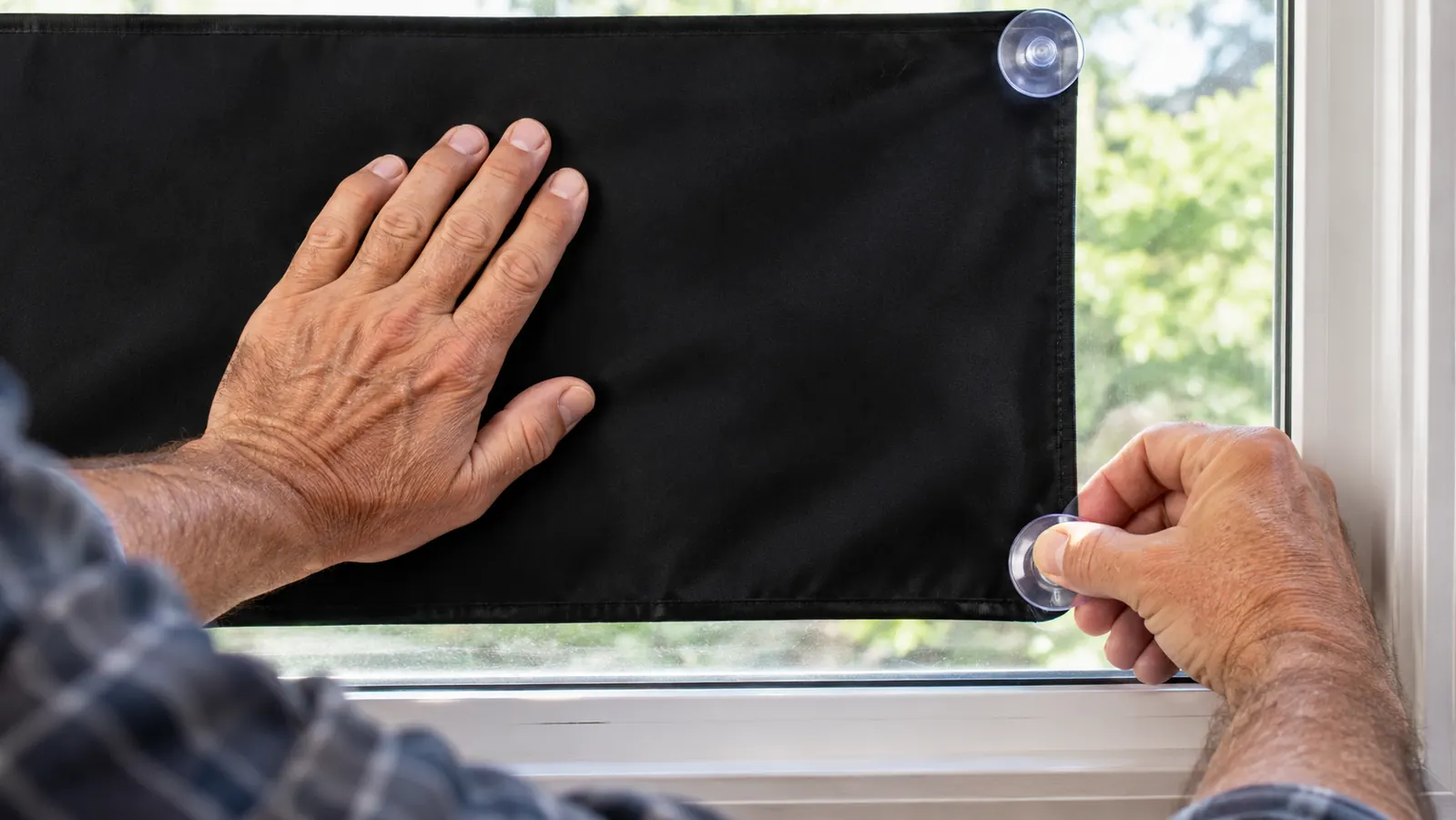
The reason the Tommee Tippee blind is on our window and curtains are not is simple: it covers the glass, not the wall around it. His window faces east, and by 7 a.m. in spring the sun laid a bright stripe up the wall beside the crib. Naps in that room were short. The fabric sits flat against the frame with suction cups fitted all the way round, so there is no glowing gap down one side the way there is with a panel that stops an inch short of the frame. The fastenings adjust, and the blind fits a window up to about 51 by 78 inches, which covered ours with room to spare. That is the whole mechanism, and it is why it works: light comes from the glass, so cover the glass.
The second thing it wins is that there is nothing to install. I put that nursery together in a hurry in January, three weeks before he was due, and I did not want a drill, a rod, brackets or a level in that room. You wet the suction cups, press them, adjust the fastenings to the size of the window, and you are done in a few minutes. It comes off just as fast. The crib is against the inside wall, across the room from the window, so nothing in the window is within his reach, and I have kept it that way on purpose since the night we moved him in from the bassinet. If you are renting, or if the window is not yours to put holes in, that matters more than any feature on a chart.
Third, it travels. In July we spent a weekend at my mother's house in Erie, Pennsylvania, and the blind folded into its bag, which is about 11 by 9 by 2.4 inches, and went into the suitcase next to the monitor. Her spare room has a bare window and no curtains at all. Twenty minutes after we arrived that room was dark enough to put him down in it. Curtains would not have made the trip, and a folded blind takes up less space than a pair of his shoes. That weekend is the only trip we have taken with him, and the only time the blind has left the house.
By 7 a.m. the stripe of sun that used to crawl up the crib wall was simply gone, and I stopped tiptoeing past that door.
Where Blackout Curtains Wins
Curtains win on how the room looks, and I am not going to pretend otherwise. The blind is plain. From inside it is a flat sheet of fabric over a window, and from the street it looks like nothing at all. Curtains are furniture. You pick a colour, a weight, a drape, and the nursery stops looking like a room with a sheet taped over the glass. The thin white curtains that came with this house are still hanging over our blind, which probably tells you what I think of the view from the sidewalk. If that room is ever going to be shown to anyone, the curtains are the thing they will notice.
Curtains also leave you a room you can use during the day. Ours is dark all day because the blind stays up, so we play downstairs and the nursery is for sleeping and changing. That is fine at nine months and I suspect it will be less fine at two years, when he wants to take his trucks in there. With curtains you pull them open and the room is a room again, and you close them with one hand instead of wetting four suction cups and pressing them flat against cold glass. Small thing. You do it twice a day, every day, for years, so small things add up.
One more honest point in their column: curtains are the version you will still like in three years. A rod and a pair of panels are a permanent answer to a permanent window, and if you move house you take them with you and they fit the next window too. The blind is a very good answer to a temporary problem, which is what the first year mostly is. If the nursery is forever and you care how it looks, that is a real argument and I would not talk you out of it. I would only say that you can hang curtains later, and you cannot make a curtain block the light the way this does on a bad window.
The one that covers the glass instead of the wall
Suction cups fitted all the way round, fastenings that adjust to fit a window up to about 51 by 78 inches, and a fold size of about 11 by 9 by 2.4 inches for the bag. Machine washable. It is on our east window right now.
Amazon Check Today's Price on Amazon →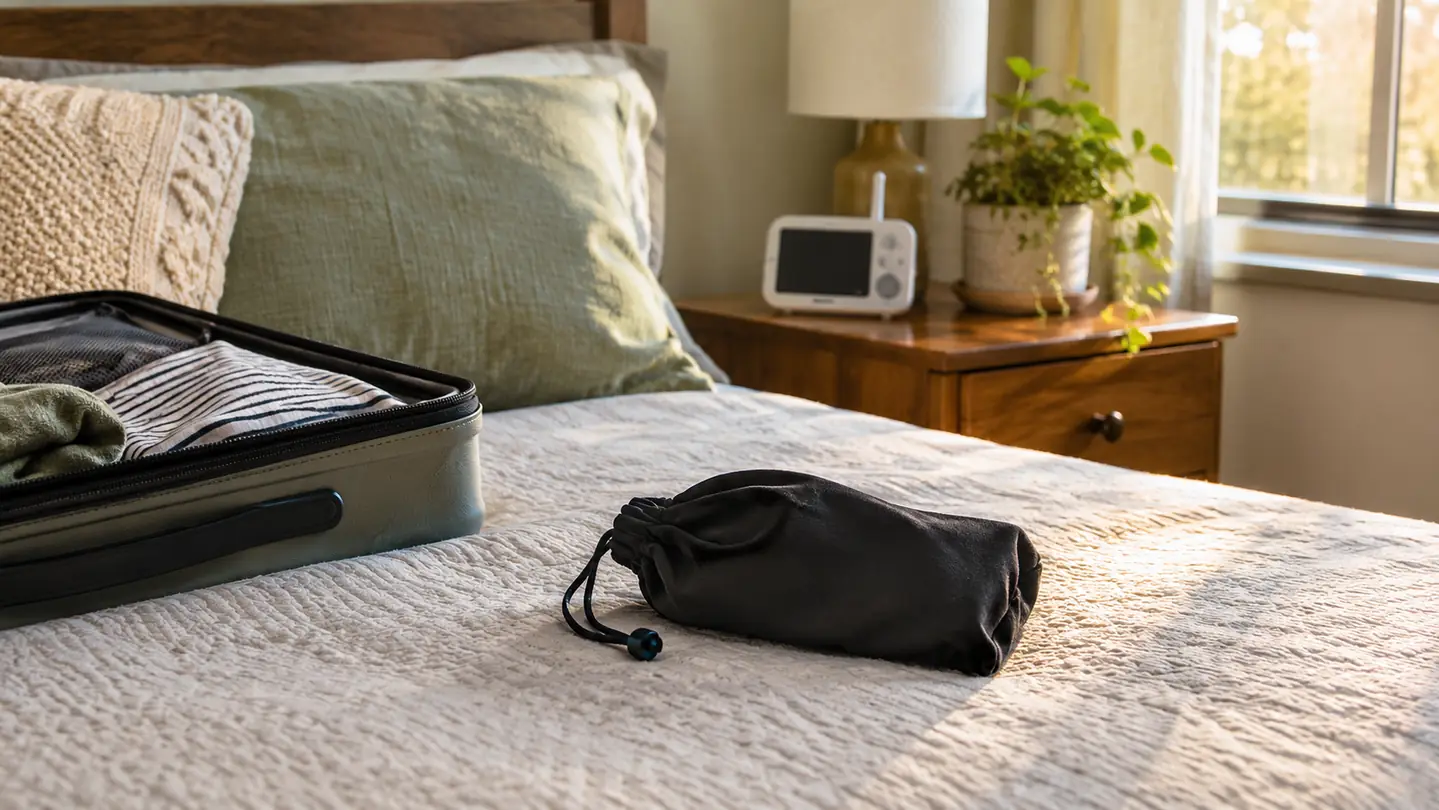
What Nine Months of the Blind Actually Looks Like
It has been up since the week before he was born. It has come down twice: once in June for the washing machine, and once in July for the trip to Erie. Everything else about it is the absence of a story. I do not think about it. I do not adjust it. It is the only piece of baby gear in this house that has never needed a second look, and after nine months of monitors, swaddles and a sound machine that wants the Wi Fi password, I notice that more than I expected to. Most of the nursery is a negotiation. The window is not.
The downsides are real and they are small. One corner lets go now and then, usually on a cold morning when the glass is at its coldest. You wet the cup, press it, and it holds again. Fitting it takes a few minutes, longer the first time when you are working out how much slack the fastenings need at each corner. And because it stays up, the room stays dark, which is the whole point and also the thing I complain about most. None of that is a reason not to buy it. It is the price of a flat sheet of fabric holding itself to a pane of glass.
What I will not tell you is that it made him sleep. Milo still wakes some nights, and no window covering changes that. What I can tell you is that the light stopped ending his naps at the first bright edge of the morning, and that the stripe of sun on the crib wall is gone. Nothing you hang on a window prevents SIDS or treats any medical problem, and that is a conversation for Dr. Bell and for safe sleep guidance. Our crib stays on his back, on a firm flat mattress, with nothing loose in it, and the window is not the reason he sleeps or does not.
Do You Need Both?
In our house we ended up with both, by accident. The thin white curtains that came with the house never came down, and they hang over the top of the blind. They add nothing to the darkness. They soften the window, they hide the cups, and I have left them because taking a curtain rod down was not how I wanted to spend a weekend in February. If you already have curtains, the blind goes up behind them and nobody has to choose. That is the least dramatic answer in this whole article and probably the one most people should take.
If you are starting from nothing, one is usually enough. The blind on its own handles the light in a room like ours. Curtains on their own handle it too, provided you buy panels wide enough to overlap the frame on both sides, hang the rod past the window by a few inches, and accept a little glow along the top. Doing both is what you do when the window is the reason the whole house is up at 5:50 in June, and that was our window. It is not extra credit. It is triage.
Who Should Buy Which
Buy the Tommee Tippee blind if any of this sounds like your nursery. You rent, so drilling is not yours to do. Your window faces the sunrise and the crib is anywhere near it. You travel at all, even just to a grandmother's house for a weekend. You want the room dark tonight, not after a trip to the hardware store. You have an odd sized window, because the fastenings adjust up to about 51 by 78 inches and will cover more than a fixed panel does. You want to fold it up and take it with you when the nursery stops being a nursery.
Buy curtains if you are staying put and the room has to look finished. If you want to open a window on a cool night without taking the covering down first, curtains are easier. If your baby will use that room for years and you want to open it up on a Saturday morning, curtains do that and a blind does not. And if your window is not actually a light problem, buy the curtains and spend the difference on something else. Plenty of nurseries are dark enough already, and nobody should buy gear to solve a problem they do not have.
If a strip of morning sun is deciding when nap time ends, start with the glass
Suction cups, adjustable fastenings up to about 51 by 78 inches, machine washable, and it folds into a bag small enough for the weekend at grandma's. Nine months in, it is the one thing in our nursery I have never had to think about twice.
Amazon Check Today's Price on Amazon →