
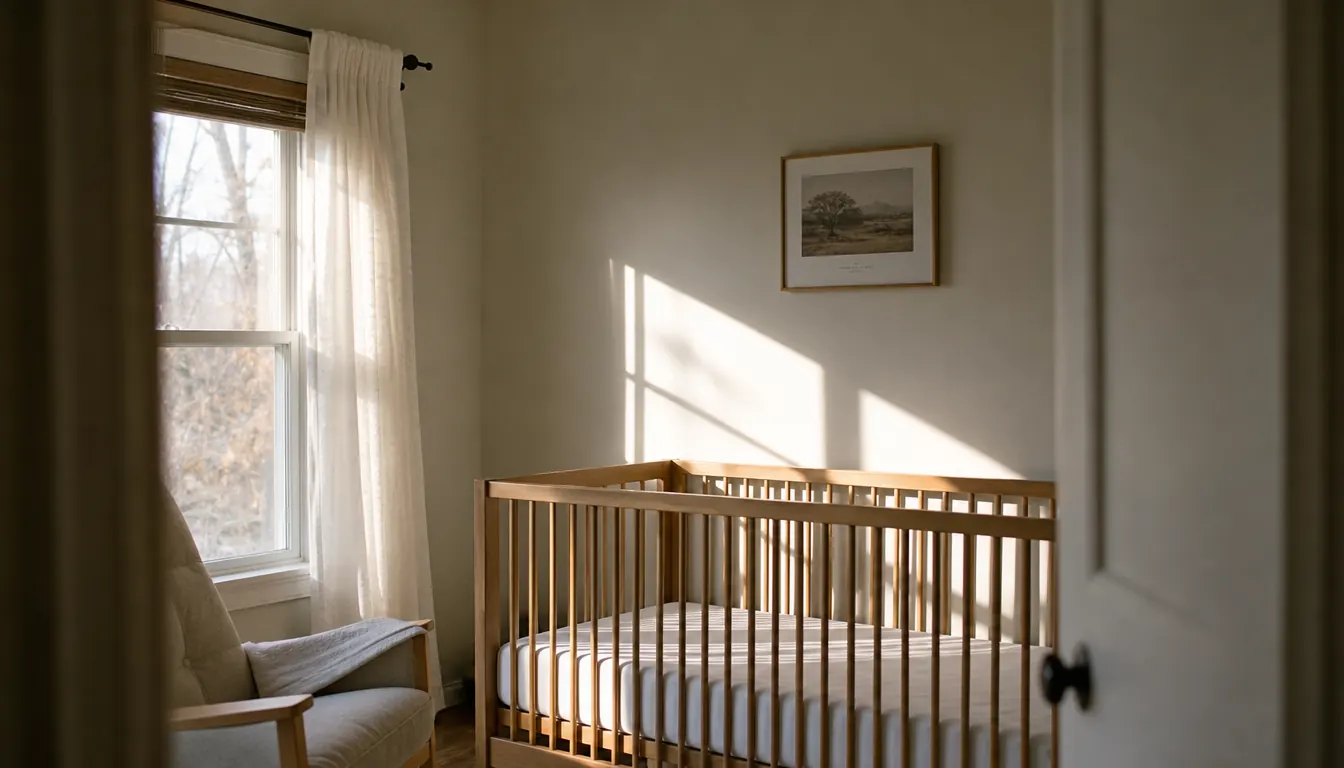
Milo's nursery has exactly one window, and it faces east. By seven in the morning the sun had cleared the roof next door and landed on the wall behind his crib. The crib was already on the inside wall, as far from that glass as the room allows, and it did not matter. Light bounced off the pale wall and the room got bright enough to read a board book in. His naps in that room ran about twenty five minutes and then he was up, blinking, finished.
I am not going to tell you a dark room is why your baby does not nap. It is not that simple, and anyone who says otherwise is selling you something. What I will tell you is that light is one of the few things in a nursery you can actually control, and getting it under control is worth one Saturday morning. We hung the Tommee Tippee Sleeptime Portable Blackout Blind the week before Milo was born. It has been on that window ever since, and it came down exactly twice: once for a wash and once for a weekend at my mother's house. Here is the order I would do it in if I were starting over.
One window, one blind, and mornings that start when you decide they do
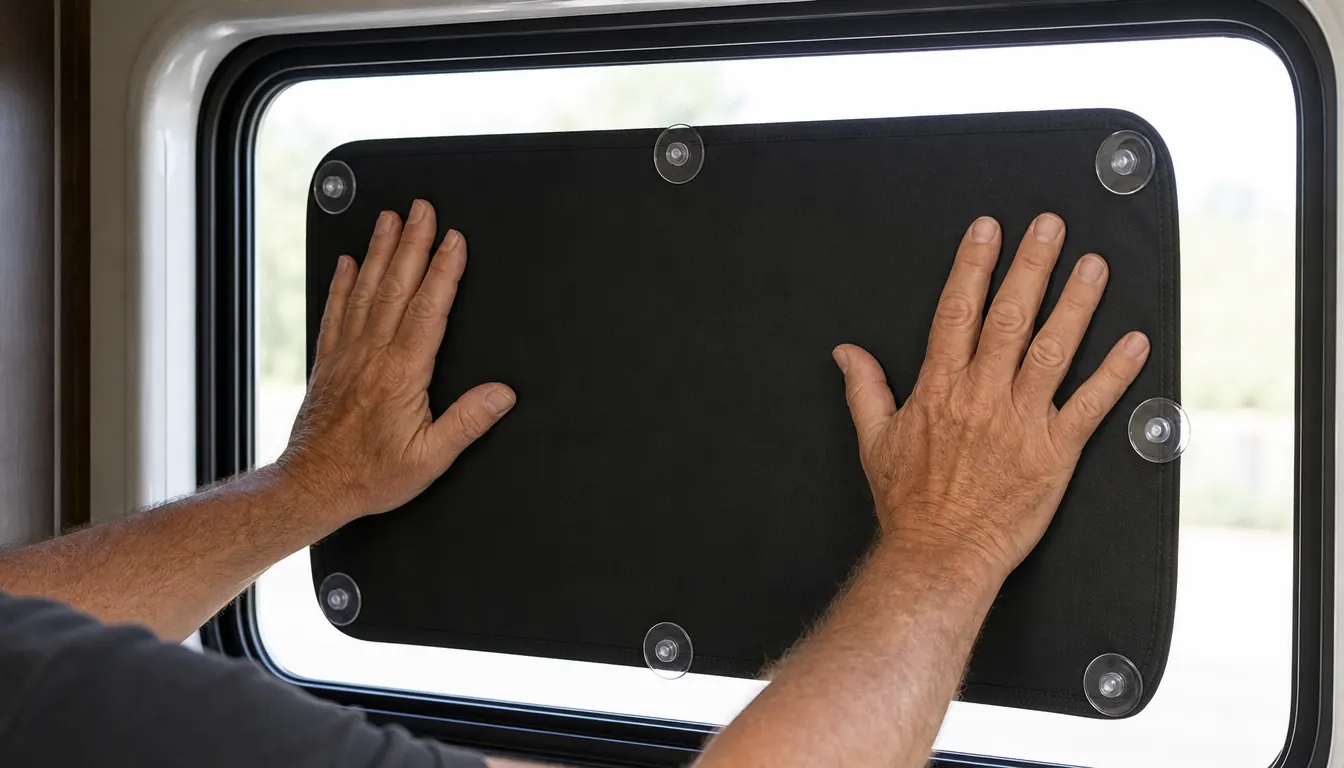
The Tommee Tippee Sleeptime blind attaches with suction cups fitted all the way round the edge, adjusts to fit a window up to about 51 by 78 inches, and folds into its own travel bag when you need it somewhere else. It has been on our nursery window for nine months.
Amazon Check Today's Price on Amazon →Step 1: Track the light before you buy anything
Before you spend a cent, spend a week watching your nursery window. Note the hour the sun first hits the glass. Note which wall it lands on an hour later. Note whether there is a streetlight outside that comes through the top of the curtain at nine at night. I wrote all of it on the back of an envelope taped inside a kitchen cabinet, which is not elegant but is exactly where I would look for it again.
For us the answer was a hard block from about 6:40 to 9:00, which is precisely the nap window. That told me two things: the problem was the window and not the crib, and I did not need to darken the entire room, only stop the direct sun from coming through that one pane. If your window faces north, your problem is more likely a streetlight or an early summer sunrise than a beam across the crib, and you will want to look at your window at night before you buy anything at all.
Then measure the glass and the frame around it. The blind I use adjusts with fastenings so it fits a window up to a maximum of about 51 by 78 inches, which covers most nursery windows with room to overlap the frame. If your window is wider than that, or if you have a deep sill with a radiator under it, this is the moment to find out rather than after the box arrives.
The white curtains were my first attempt and they failed in a way I should have predicted. They are thin cotton, they came with the house, and pulling them shut at nine in the morning moved the bright patch on the crib wall by about a foot and did nothing else. I tried folding a dark towel over the rod next, which worked for one afternoon and then slid off onto the sill, and I stopped there, because a towel balanced over a window in a room where a baby sleeps is not a solution I wanted to leave up overnight.
Step 2: Get the crib and the cords right before you hang anything
This step is not about light and it matters more than the other four. Milo sleeps on his back, on a firm flat mattress with a fitted sheet, and there is nothing else in the crib. No blanket, no pillow, no bumper, no toy. That is the guidance we were given and it is the guidance I would pass on to you, along with a call to your own pediatrician if you have questions, because I am a mother in Dayton, Ohio, not a medical professional.
Cords are the other half of it. Anything plugged in near a crib needs to be out of reach, with the slack run down behind furniture and pinned out of the way. Our video camera sits on the dresser about seven feet from the crib and its cord drops behind the dresser. The audio unit sits on the far wall shelf with its cord behind the shelf. This is also part of why I liked this blind: it is held on by suction cups, so there is no cord to run down the wall and nothing hanging beside the crib to reach for.
Step 3: Fit the blind to the glass, not to the curtain rod
The first fitting of the Tommee Tippee blind took me a few minutes and I got it wrong twice. Wet the suction cups, do not just lick a finger and dab at them. Press each one flat against clean glass and hold it for a few seconds so it seats, then move to the next. Work along the top edge first, then down one side, then the other, then the bottom, because the fabric will fight you if you try to do all four corners at once.
What I got wrong the first time was the order. I started at the bottom left, worked my way up, and ended with a slack pleat of fabric across the top that no amount of tugging would flatten. The second try I did the top edge first and it sat flat in maybe thirty seconds.
Then use the fastenings to pull the fabric so it overlaps the frame rather than stopping at the edge of the glass. The overlap is the whole point. A blind that covers the glass but leaves a two inch strip of frame exposed is a blind that lets a stripe of morning sun across the crib wall at exactly the wrong moment.
Two honest notes. One corner of ours lets go now and then on really cold glass, usually in January, and I press it back while Milo is finishing his bottle. And the thing looks plain from the street. Nobody has ever complimented it. It is a plain rectangle doing a job, not a design decision, and the thin white curtains that came with the house are still up in front of it.
Same crib, same baby, same afternoon. The only thing that changed was the window, and his naps went from twenty five minutes to a little over an hour.
Step 4: Hunt the light leaks at the edges
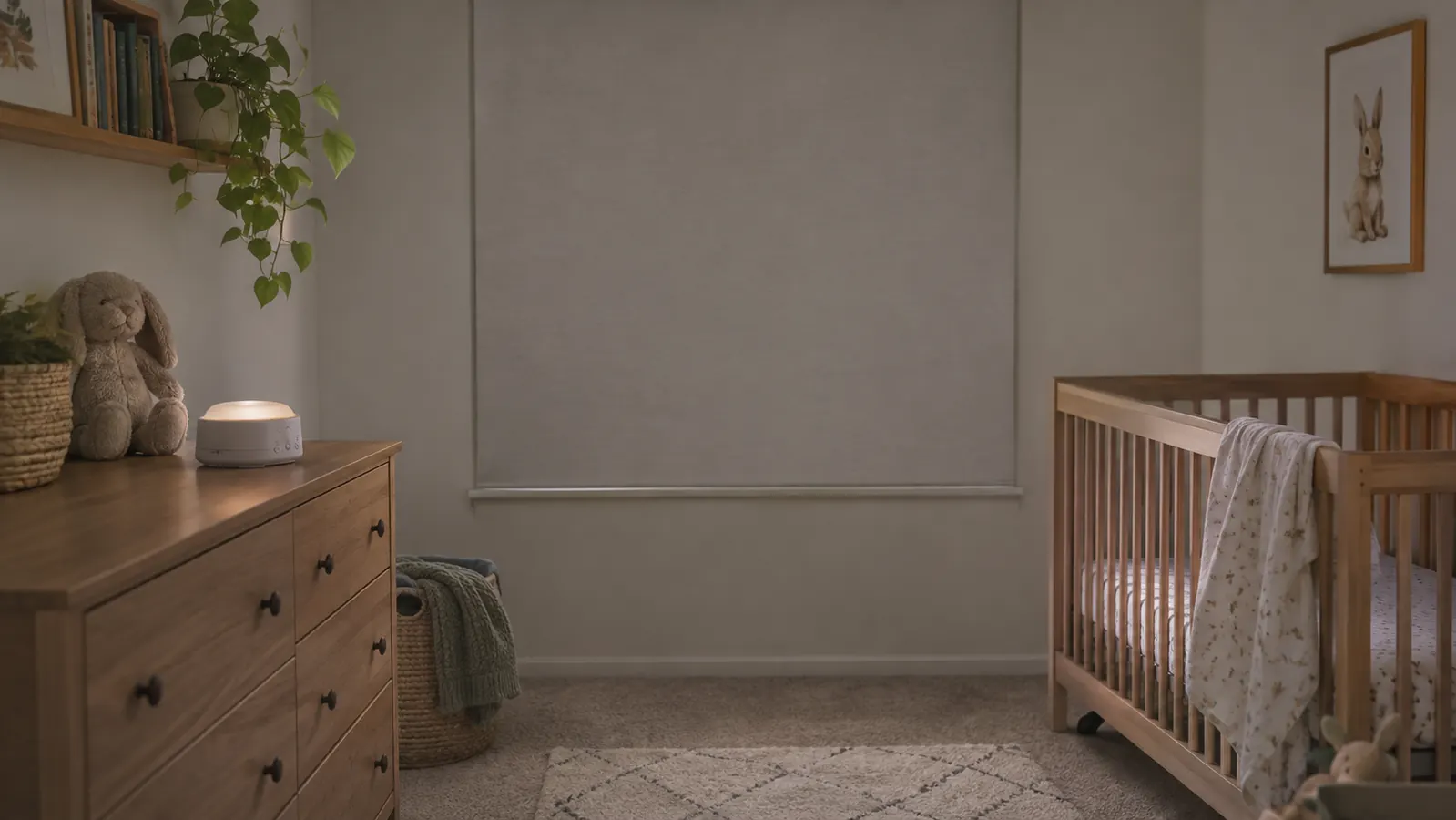
Check the room at the hour your baby actually naps, not at night. Leaks show up in daylight and nowhere else. Stand at the crib and look at the wall behind it. If you can see a bright line, that is the spot to work on. Ours leaked along the top edge for the first week until I stopped being precious about making it neat and just pulled the fabric higher.
Layering helps and costs nothing. The old white curtains hanging in front of the blind cut the glow at the sides, and tucking their edges behind the fabric closes the gap between blind and wall. Do not drape a towel or a blanket over anything near the crib to chase the last of the light. Wipe condensation off the glass in winter and let the fabric dry before you fold it away, since polyester will hold a damp smell if you bag it wet.
There is also a difference between dark and truly black. Our room is not pitch black at two in the afternoon; it is dim enough that my eyes take a moment when I walk in, and that is the point. Chasing absolute black usually means taping things to a wall, and I was not willing to do that in the room where my son sleeps.
Step 5: Build the nap routine around the dark room, then repeat it anywhere
The blind is not a routine. It is the room the routine happens in, and it needs to be the same room every time. Ours goes like this: feed, one board book, the light on the dresser dims to a warm glow, the pink noise comes on low, and Milo goes down awake. Same four beats for the morning nap and the afternoon nap. It took about two weeks after he moved into the crib at six months before that sequence stopped feeling like a suggestion and started feeling like a signal.
The other reason I like a blind over fixed curtains is that you can take it with you. It folds down to roughly 11 by 9 by 2.4 inches in the travel bag, which fits in a diaper bag. We drove to my mother's house in Erie, Pennsylvania, for one weekend in July and the blind came with us. I wet the cups on her guest room window, hung it, and Milo napped in a room that was not his for the first time without a fight. The video monitor came too. The audio monitor and the sound machine stayed home, because neither one travels well.
And here is the part nobody puts in the guide. When the nursery is properly dark, it is dark all day, which means the room stops being useful for anything except sleeping. Play happens downstairs now. I also still get up at night sometimes, because Milo is nine months old and he wakes, and no window covering changes that. What the dark room did was remove one reason he might wake early in the morning, and give me a signal I could repeat in a hotel or at a relative's house.
One more thing I would tell a friend: hang it before the baby comes, not after. I put ours up on a Saturday in early February, about a week before Milo was born, with time on my hands and nobody crying in the next room. If you wait until you are three weeks in and desperate, you will be fitting suction cups one handed at seven in the morning with a baby on your shoulder.
What Else Helps
Sound does more for us than darkness ever did, and it does a different job. The pink noise machine on the dresser about seven feet from the crib masks the sound of Nate leaving at 5:30 for work and the dog barking two doors down. It stays home on trips because it is corded with no battery. If you are choosing between buying a sound machine and buying a blind, and your nursery is already reasonably dim, buy the sound machine.
Monitors are worth thinking through at the same time, because that is the other thing that lives near the window and the crib. I use a video monitor on the dresser for naps and, at night, an audio only unit on my own nightstand so I am not staring at a screen at two in the morning. Set whichever you choose up so that no cord is within reach of the crib and the camera is not mounted on the crib itself.
The last thing in this list is the least fun: if your baby is waking constantly, or not napping at all, or you are worried about breathing, feeding or growth, that is a call to your pediatrician and not a shopping problem. Dr. Bell has told me more than once that sleep is not linear in the first year, and she is right. A dark room is a tool. It is not a fix, and it is not a promise.
The one thing on this list that stays on the window all year
The Tommee Tippee Sleeptime blind has been up since the week before Milo was born. It comes down for a machine wash and it comes down for travel, and then it goes straight back on the glass. That is about as strong an endorsement as I can give a piece of fabric.
Amazon Check Today's Price on Amazon →