
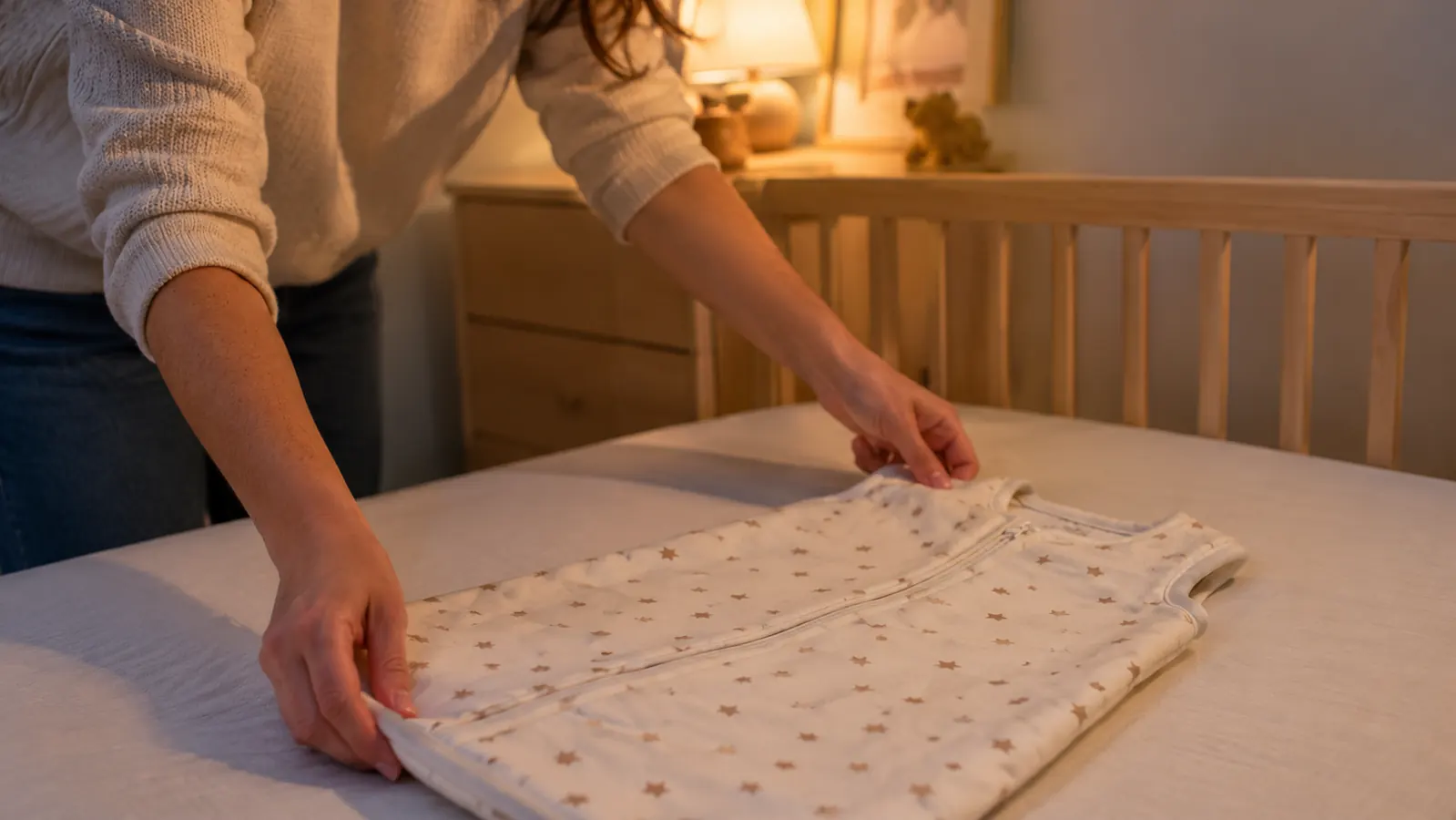
The nurse showed me how to swaddle with a blanket exactly once, at two in the morning, with hands moving faster than my eyes could follow. I got home, laid a flannel square on the nursery rug in our house in Dayton, and produced something that looked less like a swaddle and more like a burrito with a grudge. Milo got an arm out in under ten minutes. So did I, emotionally.
Two weeks later I stopped fighting the blanket. I put him in an arms-up swaddle instead, the Love to Dream Swaddle UP in size Small, which the listing gives as 8 to 13 pounds and up to 25 inches. That is roughly the window between a newborn and the first signs of rolling. It is not a blanket, so there is nothing to fold, tuck or pin. There is one two-way zipper and two sleeves bent at the elbow so his hands rest up near his face, which is where they wanted to be anyway. That is the entire idea, and it took me four weeks and some tears to appreciate it.
Here is what this guide is and is not. It is the exact sequence I used, from late February until mid May, with the numbers I actually checked and the mistakes I actually made. It is not a promise that your baby will sleep. Milo is nine months old now and he still wakes some nights, and nothing I put on him or near him changed that. A swaddle is a garment. It is not a cure for anything.
No folding, no escaping arms: the swaddle that ended my 2 a.m. rewrap
Size Small fits 8 to 13 pounds and up to 25 inches. 1.0 TOG is meant for rooms between 68 and 75 degrees. It goes in the machine, which matters more than the listing lets on.
Amazon Check Today's Price on Amazon →The Five Steps, In Order
Step 1: Check his weight and the room temperature before you buy
Swaddle sizing runs on weight, not age, and the Love to Dream chart is not generous about the top end. Milo was born on February 10 at 7 pounds 6 ounces, which put him under the Small for his first two weeks. He crossed 8 pounds at about two weeks old and started wearing it in late February. If your baby is already past 13 pounds or past 25 inches, the Small is the wrong purchase, full stop. Buy the next size up.
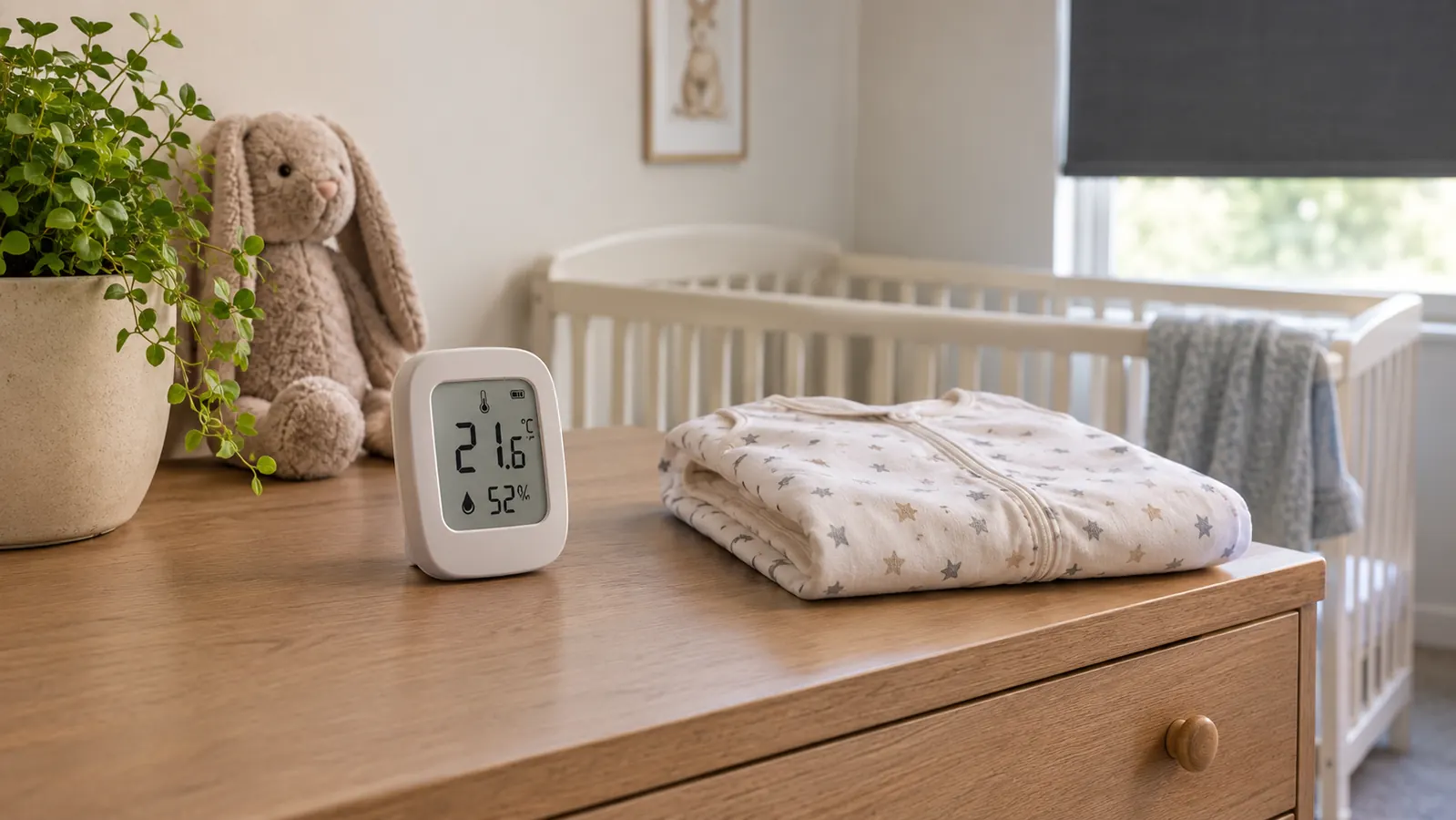
The second number is the room. The 1.0 TOG rating on the Small is meant for 68 to 75 degrees, and our nursery runs warmer than the rest of the house because the one window faces east. On the hot nights in early summer I put him in it over a short-sleeve bodysuit and nothing else. In February I layered more underneath. A cheap thermometer on the dresser settled arguments that my own hands could not.
Then check both numbers again every couple of weeks, because babies do not announce a growth spurt. This is the one real annoyance with the product: there is no stretch in the weight range and you have to look. We got about eleven weeks out of one size, and then it was over.
Step 2: Lay it flat and open the zipper all the way before he is near it
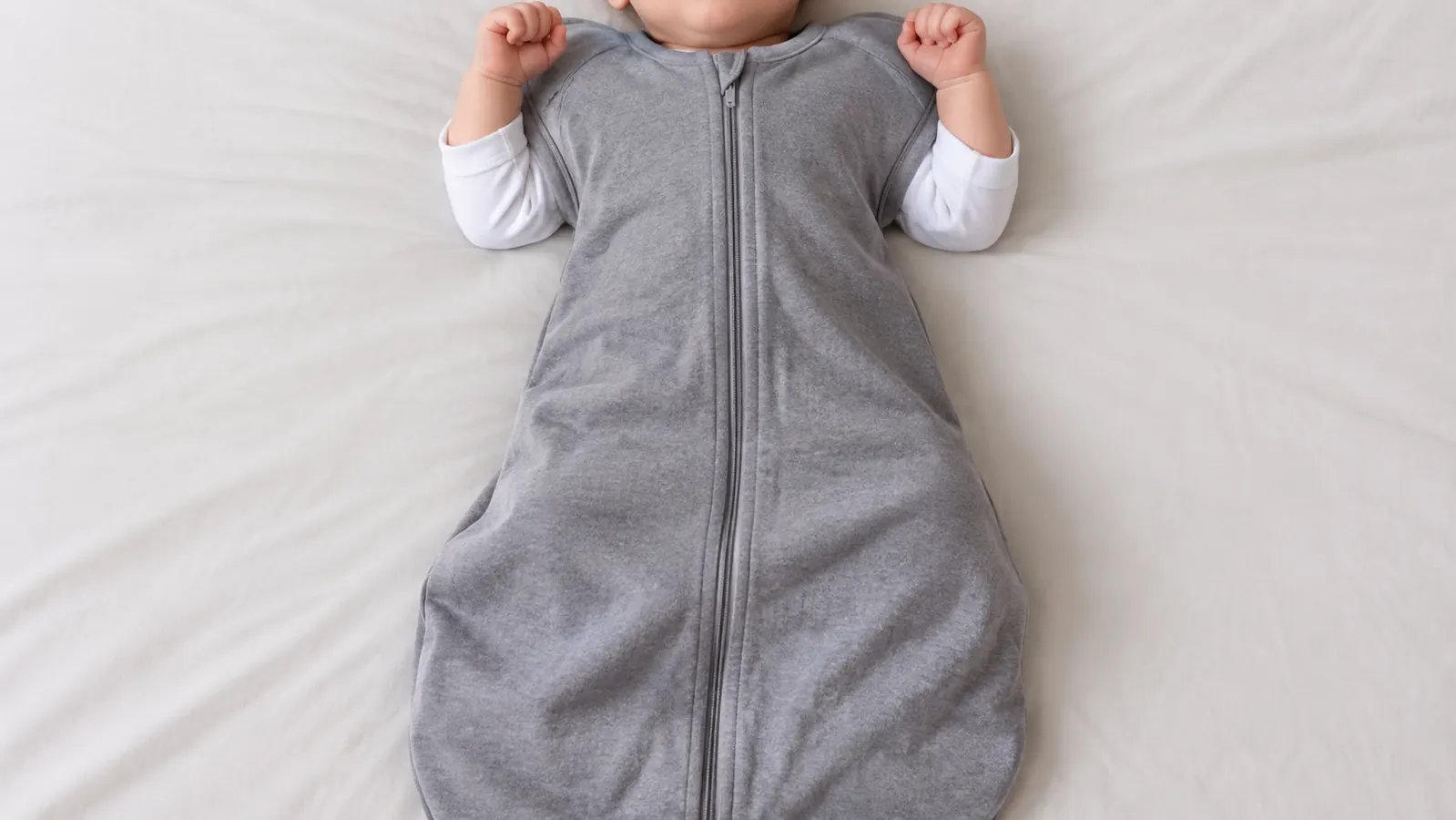
Unzip in both directions so the front opens flat, like a sleeping bag with sleeves. Lay it on the mattress or the changing pad, then set him down on his back on top of it. Do that part first. Trying to thread a fussing baby into a half-open swaddle is how people decide the product does not work, when the product was fine and the order was wrong.
Legs go in the leg area at the bottom, not into the sleeves. The sleeves are for arms. That sounds obvious until it is three in the morning and you are working upside down in the dark.
Laid flat, it measures about 22 inches long and 12 inches wide, so it sits on a bassinet mattress without hanging over the edge. I cared about that more than I expected to, because I did not want fabric draping into the bassinet while he slept.
The wash cycle matters more than it sounds. Two swaddles is not a luxury, it is the difference between using the thing and giving up on it, because a baby in a swaddle will leak through it within a week. Ours went through the machine and the dryer on low, and the zipper and the knit both survived eleven weeks of that without snagging. If you only buy one, you will be washing it at ten at night with a hair dryer in your other hand.
Step 3: Let the arms stay up, and do not pin them down
The arms-up shape is the reason I bought it and the reason it worked. His elbows sit bent, his hands sit near his face, and he can get a hand to his mouth through the fabric. For about two weeks he sucked on the sleeve near his wrist until it was damp, then he stopped and found his thumb through the fabric instead. Love to Dream cuts the sleeve to hold that bend, and you can see it the second you lay the swaddle flat on the mattress.
What not to do is fold his arms down inside it. It is not built for that, and the sleeves bunch and pull at the shoulders. If your baby genuinely needs arms down, you want a different garment, and there is nothing wrong with that. But if the arms-up position is the thing that keeps him calm, do not fight it because a book or an aunt told you swaddles mean pinned arms.
One honest note before you buy: this can run warm. It is 93 percent cotton and 7 percent elastane, knit and fairly light, but in a room above 75 degrees it is too much. We had two nights in June that pushed past that, long after he had outgrown the Small, and a 1.0 TOG swaddle would have been the wrong call on either of them.
Step 4: Zip from the bottom up, then check his chin
Bottom half first, then the top. The two-way zipper is the feature I would pay for again, because it is what made night changes stop being a negotiation. You unzip from the bottom, change him, zip it back, and his arms never come out. In February I could do a 3 a.m. change without waking him all the way up, which is a small thing that felt enormous at the time.
Then look at his chin. The zipper needs care near the neck, and the fabric should sit flat under his jaw rather than bunched. I run one finger around the collar every time. It takes four seconds and it is the step I have never skipped, even after a few hundred repetitions.
The fit should be close but not tight. You should be able to slide a flat hand between the fabric and his chest without pulling. If it strains across the shoulders or rides up under the chin, the size is wrong, and moving up is the fix, not squeezing him in. The Love to Dream range goes up from the Small for exactly this reason, and the Small is the only size I can speak to from use.
Step 5: Do the safe-sleep check, and know when to stop
He goes down on his back, on a firm flat mattress, with nothing loose in the crib or the bassinet. No blanket over the swaddle, no pillow, no stuffed animal, no positioner, no bumper. This is the part where I defer completely to Dr. Bell and to current safe sleep guidance, and you should too. A swaddle is a garment. It is not a medical device, and no swaddle prevents SIDS or any other condition.
The same checks apply to naps. Ours were in the nursery crib from about two weeks old, on his back, on the same empty mattress, and I ran the same four-second collar check every time. Naps are where people get casual, because it is daylight and someone is awake. The rules do not change because the sun is up.
The stop rule is the one parents get wrong most often, myself included, because it arrives at the exact moment the product is finally working. Stop swaddling at the first signs of rolling. Milo started showing signs at about 13 weeks, in mid May, and we stopped that week. He went into a plain sleeveless cotton sleep sack with no brand, and both Small swaddles went into the bottom drawer. I have not used them since.
If you are not sure whether your baby is rolling or working toward it, ask your pediatrician rather than a stranger on the internet. That is not a hedge. It is the actual answer, and it is the same answer I gave myself in May when I did not want to hear it.
What Else Helps
The swaddle was the first thing that made a difference in our house, mostly because it came first. It is not the whole picture, and I would not want you to read this and think a garment solved our nights. When Milo moved from the bassinet beside my bed into the crib across the hall in mid August, the first two weeks were rough no matter what he was wearing.
What changed it was one repeated routine, run on the Hatch on the dresser about seven feet from the crib: feed, one book, the light dims, Pink Noise at low volume, down awake. Same order, every night, no improvising. The room also had to be actually dark. The Tommee Tippee blackout blind went up on the east window the week before he was born and has stayed up since, because without it the morning sun hit the crib wall and naps ended early.
The last thing that helped was deciding not to watch him. I kept staring at the video screen at night and could not sleep, so now the audio monitor sits on my nightstand and only Nate's side has the picture. That is a preference, not a rule. But if you find yourself awake at 2 a.m. watching a sleeping baby on a screen, the gear is not the problem.
One more thing, because I wish someone had told me: none of this is linear. There were good weeks in March and terrible weeks in April with the same swaddle, the same routine and the same baby. A bad night is not evidence that the gear stopped working. It is usually teeth, or a growth spurt, or nothing at all.
None of this is a system, and I am not a sleep consultant. It is one mother in Ohio writing down what held and what did not, so you can skip the part where you cry on the nursery rug with a flannel square in your hand.
The first night in the arms-up swaddle he went down in the bassinet beside my bed without the forty minutes of wrestling that had come before. That was the whole review, as far as I was concerned.
Between 8 and 13 pounds is the window for the Small. Check the weight, then check it again in a month.
Two of them, so one is always in the wash. Size Small, 1.0 TOG for rooms from 68 to 75 degrees, 93 percent cotton and 7 percent elastane, machine wash. That is the whole buying decision I can honestly hand you.
Amazon See the Swaddle UP on Amazon →