
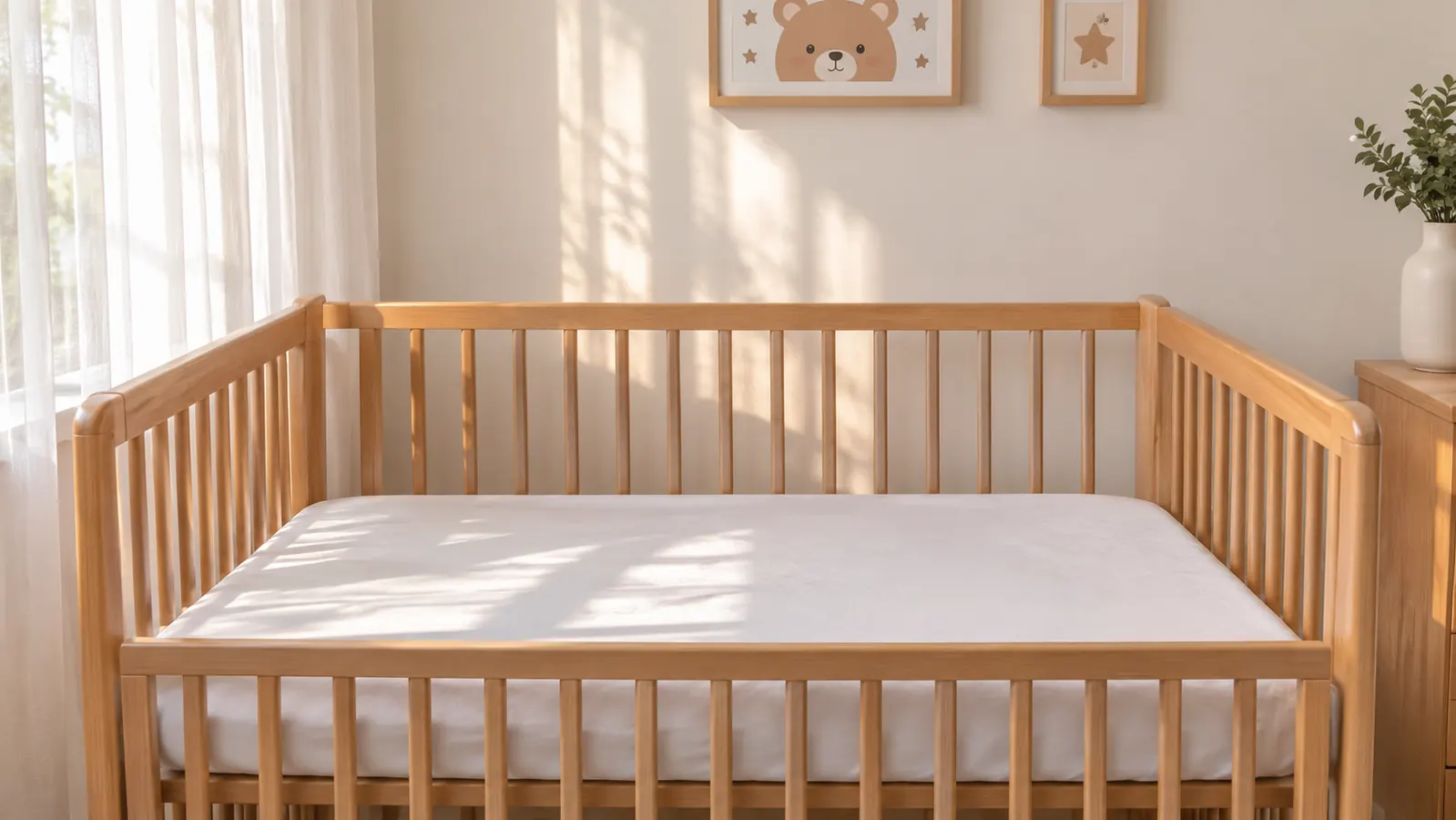
Here is the part of the Love to Dream Swaddle UP story that does not make it into the product photos: it has a shelf life, and the shelf life is short. My son Milo was born on February 10 at 7 pounds 6 ounces. The Small size starts at 8 pounds, so his first two weeks happened in a plain footed sleepsuit with no swaddle at all. He crossed 8 pounds at about two weeks old, and that was the week the Love to Dream Swaddle UP came out of the drawer. Eleven weeks later it went back in for good. That is the honest shape of this review. Everything under it is the detail.
I bought two of them in January, three weeks before my due date, in one Amazon order that also held a video monitor, an audio monitor, a sound machine and a blackout blind. Two identical Small Swaddle UPs, one on him and one in the wash, and that was the plan from day one. I had never owned a swaddle before. Nobody handed anything down to us. So when I mention a traditional blanket swaddle further down, understand that I tried one for a single night in February, it came loose, and that blanket never went near the crib or the bassinet again. This is one mother, one baby, eleven weeks, and a fairly clear memory of what annoyed me.
The Quick Verdict
The arms up shape solved the one problem my own folding could not solve, then sized itself out of our house in eleven weeks. A good answer for the newborn stretch and a poor one once the rolling starts.
Amazon Check Today's Price →If your baby is between 8 and 13 pounds, this is the window
The Small fits 8 to 13 pounds and up to 25 inches, which in our house worked out to eleven weeks from the first night to the last. Check the weight before you order, then check it again in a month.
Amazon Check Today's Price on Amazon →How I've Used It: Eleven Weeks, Night and Nap
Nights were in the bassinet beside my bed until mid August, when Milo moved across the hall into the crib. Naps happened in the nursery crib from about two weeks old. So the swaddle covered both jobs, night and day, from late February until mid May. Two sacks meant one on him and one in the wash, and the wash ran constantly, because a newborn generates an unreasonable amount of laundry and half of it seems to come from the neck area. The fabric is 93% cotton and 7% elastane, machine wash, and it came out of every cycle looking the way it went in. No pilling, and the arm openings kept their shape.
The first night was the last week of February and the upstairs was cold. He was right at 8 pounds, so the Small was roomy on him without being loose, and I remember standing over the bassinet at low light checking that the fabric was not bunched anywhere. It was not. He slept in stretches that were normal for a two week old, which is to say not long, and I lay awake anyway listening to him breathe. I want to be honest about that part too. A swaddle changes how a baby sleeps, not how his mother does.
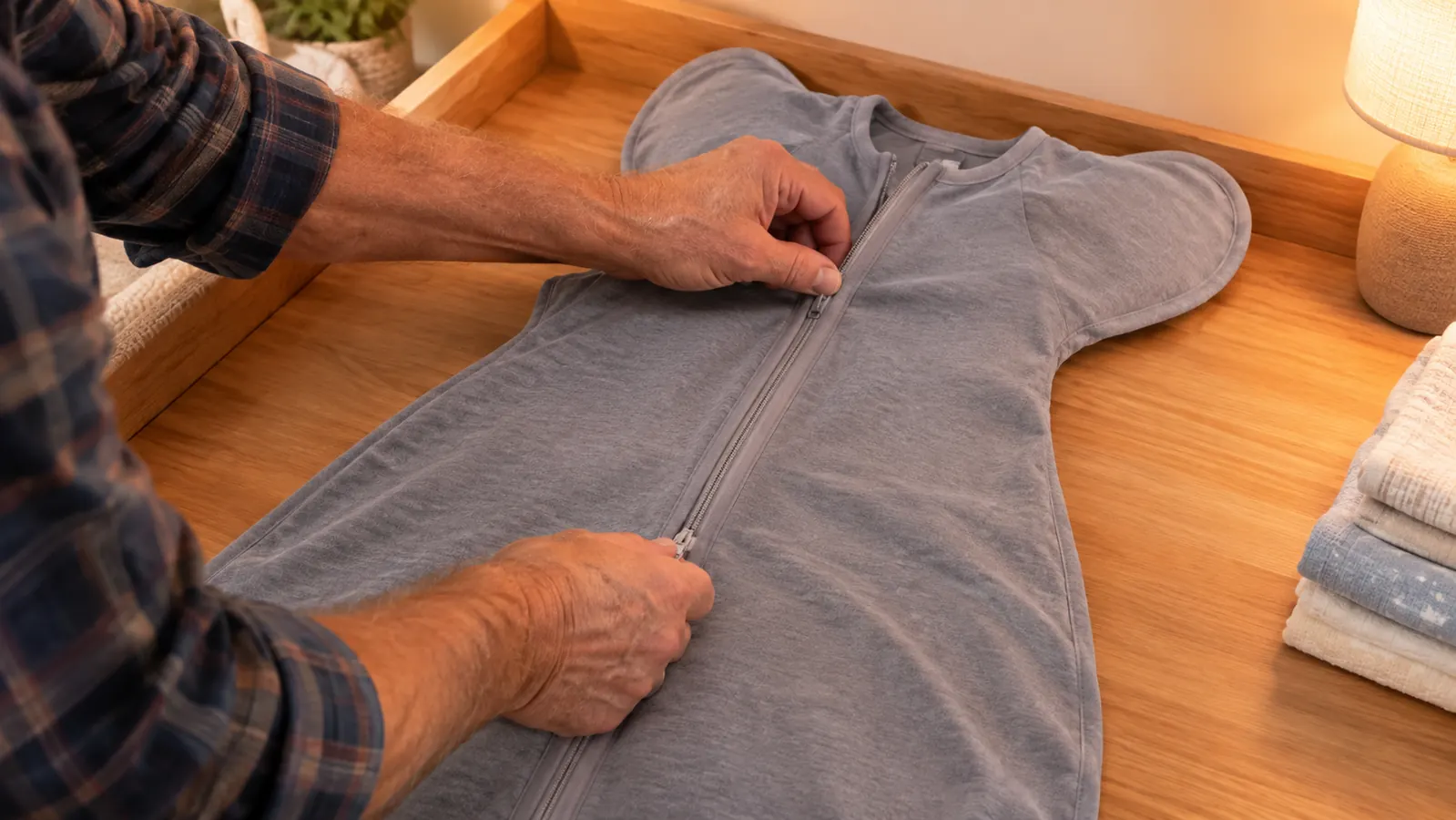
The two way zipper is the detail I would keep if I could keep only one. It opens from the bottom, so a diaper change at three in the morning meant unzipping to his waist and no further. He stayed half asleep, I stayed half asleep, and nobody had to unwrap an entire baby on a changing table at the worst hour of the night. That sounds small. It is not small in February. The zip needs a bit of care up near the chin and I checked that the fabric sat flat every single time, which I will get to in a minute.
The 1.0 TOG rating is meant for rooms between 68 and 75 degrees, and our upstairs sat at about 70 through the winter. He wore a short sleeved bodysuit underneath and nothing else. That was warm enough for a Dayton winter and, as it turned out, slightly too warm on the two afternoons in early May when the upstairs crept past 75 before we had the air conditioning switched over. He came out of it damp behind the neck on both of those days. That is less a flaw in the product than a flaw in my planning, but it is worth knowing before you buy.
What the Arms Up Design Does, and What It Does Not
The design is the entire idea. The arms sit up beside the head instead of pinned down at the sides, so his hands were close to his face all night. He could get a fist to his mouth. He could rub his own cheek. The arms were already where his body seemed to want them, so there was nothing to fight against. I am not going to tell you the Love to Dream Swaddle UP made him self soothe. I cannot know that, and neither can a product listing. What I can tell you is that the shape removed one specific fight from our nights, and that fight was about his hands.
If you have not had a newborn in the house before, the thing that wakes them is often their own arms. The startle comes, both arms fly out wide, and the baby who was asleep four seconds ago is now awake and furious about it. That is the problem this shape is built around, and it is the problem it solved for us. Notice that I am describing the shape and not promising you an outcome. Some babies hate having their arms up. Mine did not.
What it did not do is make him sleep longer. Milo woke at night in the swaddle, he woke at night after the swaddle, and he still wakes some nights now at nine months. If you are reading this hoping the arms up shape is the thing that finally gets you a full night, I would rather you hear it from me than from a review with three exclamation points in it. It is a swaddle. It does a swaddle's job well. It is not a switch.
The single night we tried the blanket was the night I understood why people give up on swaddling. The hospital nurse showed me the fold once. I got it snug at eight in the evening and by midnight it was a loose bundle around his middle with a corner drifting up near his face. That was the end of blankets in our house. Whatever you choose, the guidance is the same for everyone: baby on his back, on a firm flat surface, nothing loose in the crib. The Swaddle UP kept everything contained in one piece of fabric with a zipper, which is why I trusted it in a way I never trusted my own folding.
The Sizing Math That Ends This Early
Small covers 8 to 13 pounds and up to 25 inches. Laid flat it measures 22 inches long and 12 inches wide. Milo started at about 8 pounds and finished somewhere around 13, and that took eleven weeks, from late February to mid May. Eleven weeks is not a long run for a piece of gear you use every night and every nap. It is also exactly how long a newborn stays a newborn, so in one sense the sizing is honest about the job it is applying for.
I weighed him at home by standing on the bathroom scale with him and then without him, which is not precise and cost me nothing. That is how I knew when we crossed 8 pounds, and it is how I knew we were closing on 13. If you would rather not do scale math in your socks, ask at your well visits, but do check. A swaddle that is too big is a loose swaddle. A swaddle that is too small is a wrestling match at bedtime, and you will lose it.
In mid May, at about 13 weeks, Milo started leaning toward his side in the bassinet. Not rolling over yet, just the lean before the roll, which is the tell. That was the week I stopped. The guidance is to stop swaddling at the first signs of rolling and I did not need to be told twice. He went into a plain sleeveless cotton sleep sack with no brand name on it, and the two Love to Dream Swaddle UPs went into the bottom drawer. I have not put him in one since, and I would not, because he is nine months old now and he crosses that crib like he is being paid by the lap.
This is the part that does not appear in the product photos: the useful life here is measured in weeks, not months, and the gate is weight rather than age. A smaller newborn gets more weeks out of Small. A baby born at nine pounds gets fewer. A baby who rolls early gets fewer still. Nobody is buying a swaddle for a year. You are buying it for one stretch, and the trick is knowing which stretch you are in before you order.
Eleven weeks, two sacks, one wash rotation, and a stop the same week he first leaned toward his side.
The Annoyances: Zipper, Heat, and the Chin
The zipper comes up close under the chin, closer than I expected on the first night, and I checked that the fabric sat flat before I left the room every single time. It never rubbed him. He never had a mark. But it is something you have to think about at two in the morning while you zip a sleeping baby back into a sack by lamplight, and thinking about anything at two in the morning is a cost.
The 1.0 TOG rating has a ceiling. Above 75 degrees the fabric holds warmth a baby does not need, and an upstairs bedroom in Ohio in May can reach that without warning. If your nursery runs hot through the summer, treat this as a fall and winter purchase rather than an all year one. If you have central air and you keep the thermostat pinned, you will never notice.
Buy two if you can. One is not enough, because the wash cycle and the nap schedule will collide at least twice a week, and a swaddle sitting in the dryer at bedtime is a decision you do not want to be making at bedtime. Two was right for us and three would have been better in the weeks he was spitting up. That is not a knock on the stitching. It is the reality of a garment a newborn lives in for most of the day.
What I Did Not Test
I have not owned another swaddle, so I am not going to pretend to a comparison I did not run. I handled a hook and loop wrap style at a big box store in January and I could feel how much faster my own blanket fold would come undone by comparison, but that is thirty seconds in an aisle and not a night of use. Friends have told me about zip up sleep sacks with the arms down, and I have no experience with them, so I have no opinion worth your time. The only alternative I can speak to is the blanket, and the blanket lost.
What I Liked
- Arms up shape kept his hands at his face, which removed the startle fight from our nights
- Two way zipper opens from the bottom, so a night change never turned into a full unwrap
- 93% cotton and 7% elastane, machine wash, and it came through eleven weeks of daily washing without pilling
- One piece with a zipper, which I trusted more than my own blanket fold
- 1.0 TOG was right for a 70 degree upstairs in February and March
Where It Falls Short
- Sizing runs on weight, 8 to 13 pounds, and that window closed in eleven weeks for us
- The zipper sits close to the chin and needs a check every time you close it
- Runs warm above 75 degrees, so a hot summer nursery pushes it out of use
- Two sacks are close to mandatory, one is not enough with a newborn's laundry
- It stops at the first sign of rolling, which for us was 13 weeks
Who This Is For
Parents of a newborn who is at or near 8 pounds and heading into cool months. Parents who want one piece with one zipper and no folding at bedtime. Parents whose baby fights the arms down hold and settles better with his hands near his face. Parents who will weigh their baby every couple of weeks and who are ready to stop the week the rolling starts. If you are due in November in a house that sits around 70 degrees, this is the exact window the Small was built for, and you will get more out of it than I did.
Who Should Skip It
Skip it if your baby is already closing on 13 pounds, because you will pay for a full size and get a handful of weeks. Skip it if your nursery runs above 75 degrees for much of the year. Skip it if you want one sleep sack to carry you from newborn to six months, because this is not that product and nothing shaped like it is. And skip it if you are hoping a swaddle will make your baby sleep through the night. Nothing in this house did that, not the swaddle, not the sound machine, not the blackout blind. Milo still wakes some nights. He is nine months old and that is what nine months old looks like.
The eleven week window is the whole product
If your baby is inside the Small size range right now, this is the stretch it was made for. If the rolling has already started, close the tab and buy a plain sleep sack instead.
Amazon Check Today's Price on Amazon →