
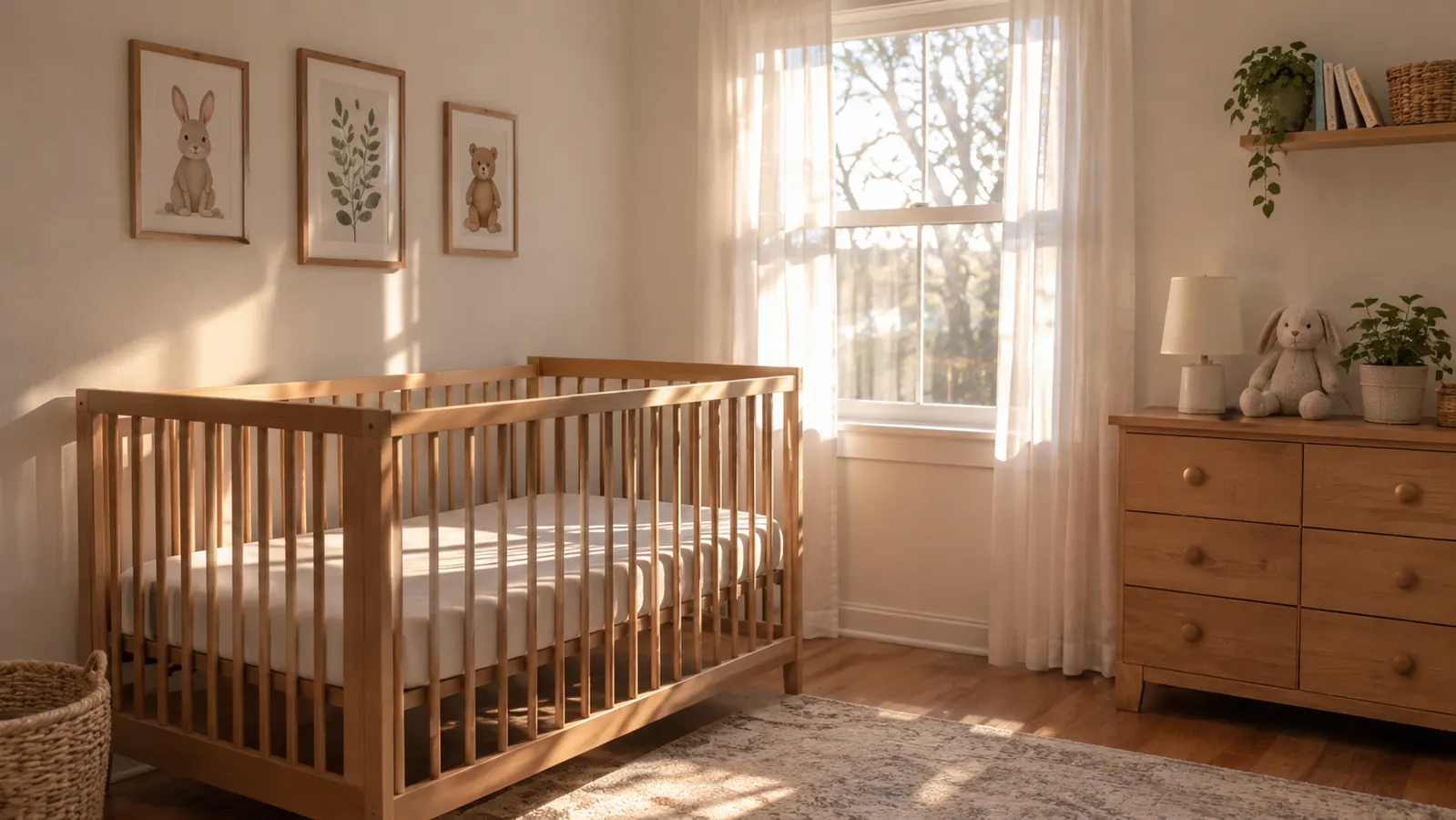
I did not buy a sound machine because I thought it would make Milo sleep. I bought it because I wanted the nursery to feel less like a room and more like a place, and I was very pregnant and willing to believe anything. That was in January, about three weeks before my due date, when I placed one Amazon order for the whole nursery setup. The Hatch Baby Sound Machine went in that cart, and it has been sitting on the same dresser seven feet from the crib ever since.
I want to be careful here. Milo is nine months old. He still wakes some nights. If you came here looking for the thing that flips a baby into a twelve hour sleeper, this is not that, and no product is. What the Hatch Baby did do is smaller and more useful than that, and I can list it plainly. Here are ten reasons it earns the spot, in roughly the order I noticed them.
The one piece of nursery gear that has never once moved from its spot
Milo has outgrown the swaddle and we have swapped the bassinet for the crib. The sound machine on the dresser is the thing that stayed.
Amazon Check Today's Price on Amazon →It masks the noise you cannot turn off
Nate is an HVAC technician and he is up at 5:30 on weekdays. Our house is old, the stairs are wood, and our bedroom is across the hall from the nursery. Before the sound machine, every one of those morning steps came through the wall like a drumbeat. Pink Noise on low volume does not erase that. It softens the edges of it, so instead of a startle there is just sound that was already there.
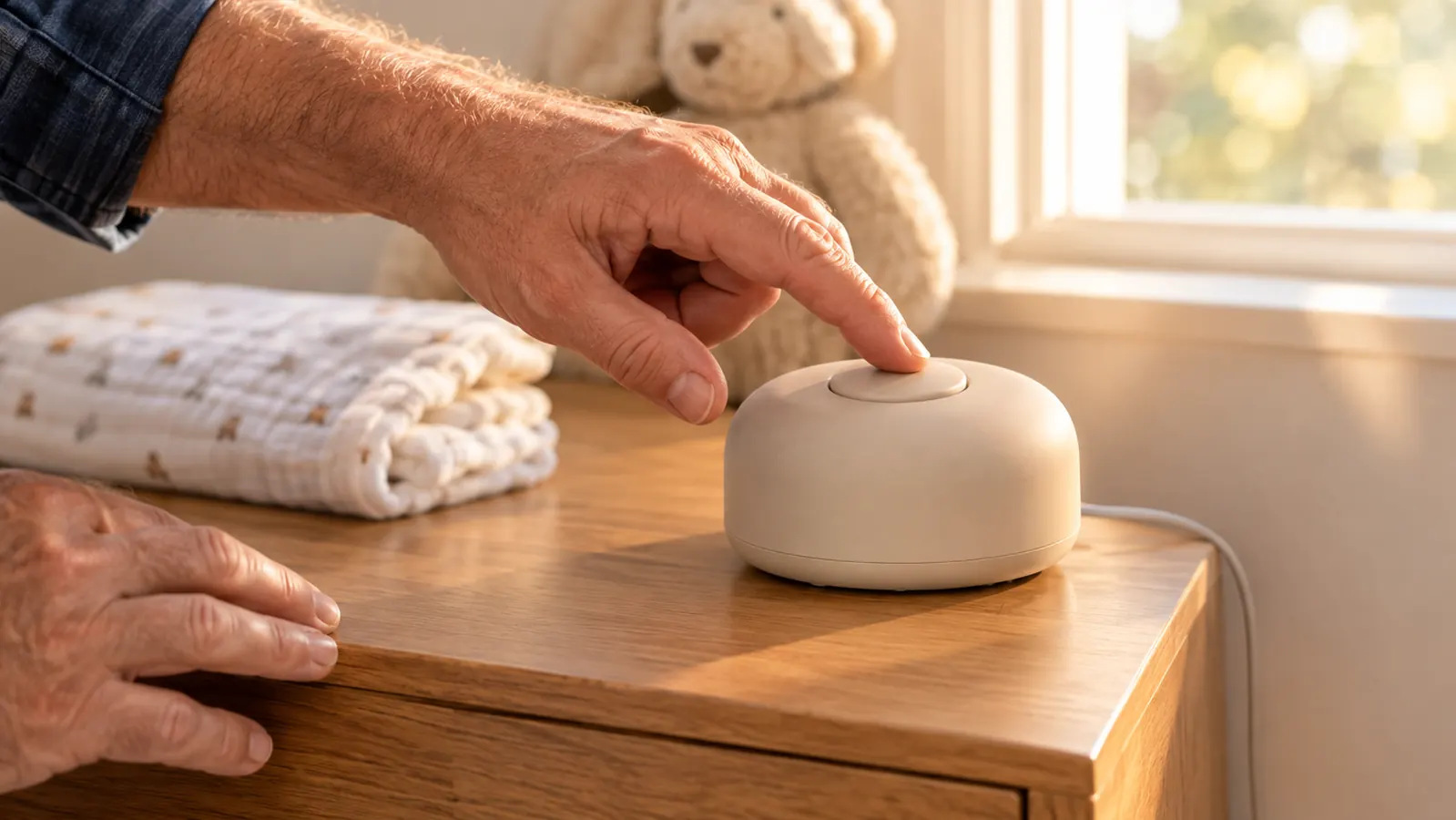
The room goes from bright to dim in one motion
I did not expect the light to matter more than the sound. The nursery window faces east, so the sun hits hard from about 7 a.m. and the room is genuinely bright. Being able to dim it to that warm low glow, in the same gesture that starts the noise, means the room tells Milo what is happening without me having to talk. Sounds are one thing. A room that visibly changes is another.
It gave me one routine to hold onto during the crib transition
Milo slept in a bassinet beside our bed from birth until he was six months old, which put us in mid August. The first two weeks in the crib were rough. What got me through was building one sequence and never changing it: feed, one book, light dims, Pink Noise on, down awake. That is the whole routine. It is not fancy. It is repeatable at 3 a.m. when I am not thinking clearly, and that is the point.
The sound stays exactly the same at every sleep
This is a small thing that turned out to be a big thing. Pink Noise on the Hatch is the same Pink Noise it was in March. Same tone, same volume. When everything else about a baby's day is shifting, having one sound that is identical from nap to nap does something for the room. It is the only part of the day I can make perfectly consistent.
I can stop it from the hall without opening the door
The Hatch Baby is set up and scheduled in the Hatch Sleep app, which needs Wi-Fi. That sounded like a hurdle in January and it is now the reason I like it. I can pause it or change the volume from the hallway with the door still shut. Five months ago that would have seemed lazy. Now it means I do not have to risk the creak of the nursery door at the exact moment things are going well.
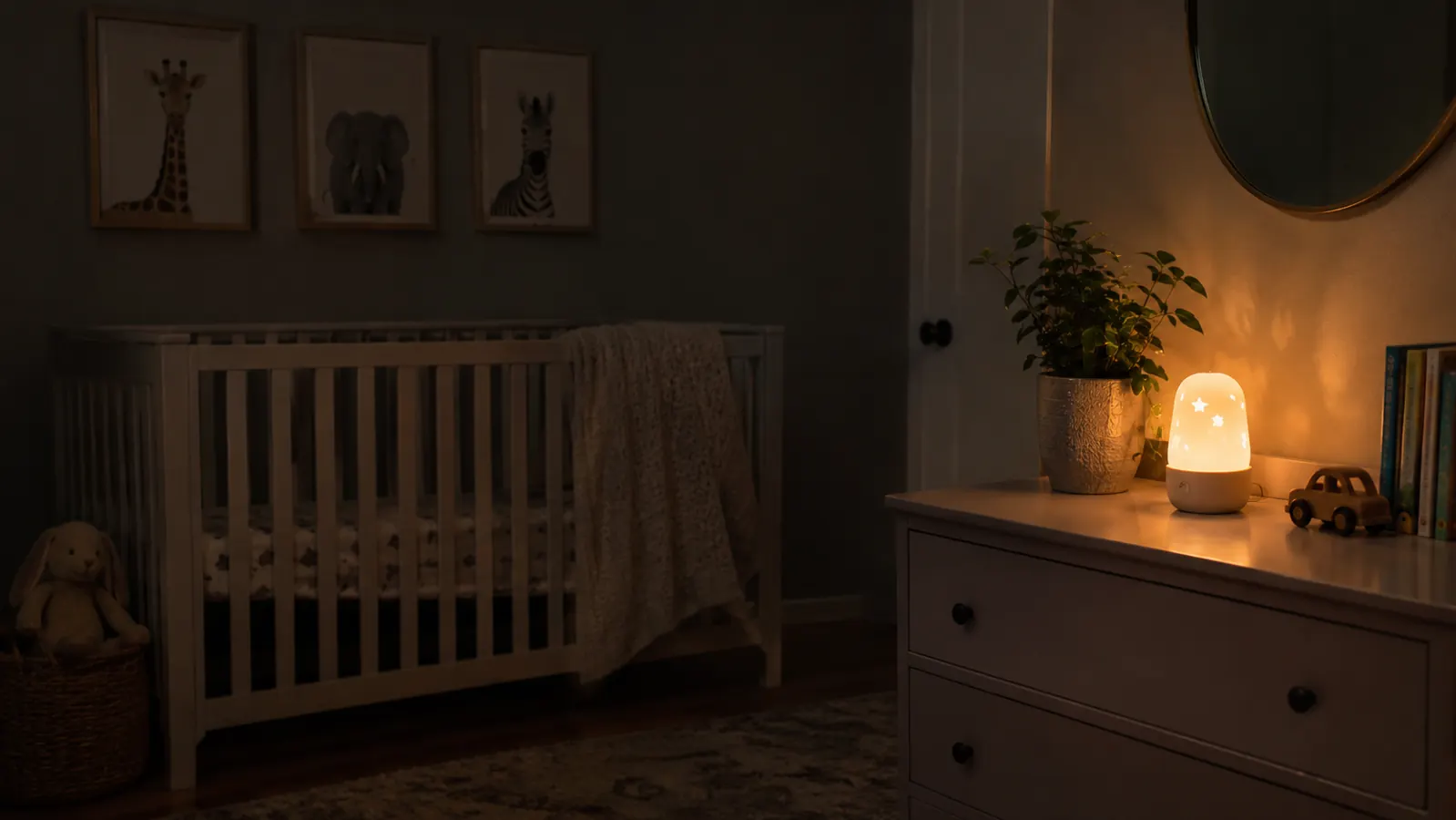
One button on top means anyone can run it
There is a large button on top to start, pause or stop, and turning it changes the volume. That is the whole physical interface. Nate does bedtime on Tuesdays and Thursdays and he has never had to ask me how it works. My mother managed it in one try in July. A device that a tired adult can operate in the dark without instructions is worth more than it sounds.
It replaced the lullabies I never used
The monitor we bought has eight lullabies built in. I used them for about a week, then stopped, because hearing a melody come out of a camera on the dresser felt wrong to me. The Hatch does the sound now, from a fixed spot, at a fixed volume, and it never surprises anyone. If you are choosing between a monitor with sound and a separate sound machine, I would put sound on the sound machine.
The light gave us a shared signal, not a night light
The nursery has a shelf on the far wall and one window with thin white curtains. We also have a blackout blind on the glass, so the room goes genuinely dark. Because of that, the dim light on the Hatch reads as a signal rather than as illumination. Warm and dim means sleep is starting. Bright means we are awake and the day is happening. Milo is nine months old and I would not claim he understands the difference. I understand it, and that has been enough.
It stays put, which means it stays set
No battery, so it is corded with a power adapter, and it has never left the dresser. It stays home on trips. I know that sounds like a limitation and I will get to that. But the flip side is that it is always in the same place, at the same height, at the same distance from the crib, and it has never needed setting up again after a weekend away. Some gear earns its keep by traveling. This earns its keep by not.
It made the room feel finished, and that helped me sleep
This one is about me, not Milo. In the first weeks after we moved him to the crib across the hall, I was up half the night staring at the video monitor. The nursery felt like a room full of jobs. Once the Hatch had a set sound and a set light, the room felt like it had a purpose and a state, and I could stop managing it. I am not going to pretend that is a feature. It is real, though, and it is why the thing is still plugged in.
I can pause the noise from the hallway with the door still shut. Five months ago that would have seemed lazy. Now it means I do not risk the creak at the exact moment things are going well.
What I'd Skip
If I were doing the January order over again, I would skip the three months of Hatch+ premium content. It came bundled, it does not auto renew, and I let it end without paying anything. The free side of the app is what I actually use: the schedule, the sound, the light. I never needed the rest, and I would not pay for it separately. I would also skip expecting the app setup to be a two minute job. It needs Wi-Fi and it took me a while on a phone in a room with bad signal. Do that part in the living room downstairs, before the baby arrives, not in the nursery at nine at night.
Two honest caveats. First, this is not a medical device and it does nothing to prevent any health problem. Follow safe sleep guidance: baby on his back, a firm flat surface, nothing loose in the crib. Second, the whole thing runs on an app for setup and scheduling, and there is no battery, so it cannot travel without an outlet. When we went to my mother's house in Erie for a weekend in July, the Hatch stayed home and the blackout blind and the video monitor went with us. If portability matters more to you than the routine and the light, a basic white noise machine is cheaper and needs no app at all.
And because I know someone will ask: no, I do not think any of this makes a baby sleep through the night. Milo still wakes. He wakes less than he did in those first two weeks in August, and I would love to give the Hatch credit for that, but babies change on their own schedule and I am not going to sell you a story about a machine. Talk to your pediatrician about sleep. Dr. Bell has been patient with my questions and vague in all the right places, which is what I wanted.
Ten reasons, one dresser, seven feet from the crib
Pink Noise on low, the light down to a dim warm glow, and one button on top. That is the whole setup, and it is the piece of gear I would buy again first.
Amazon Check Today's Price on Amazon →