
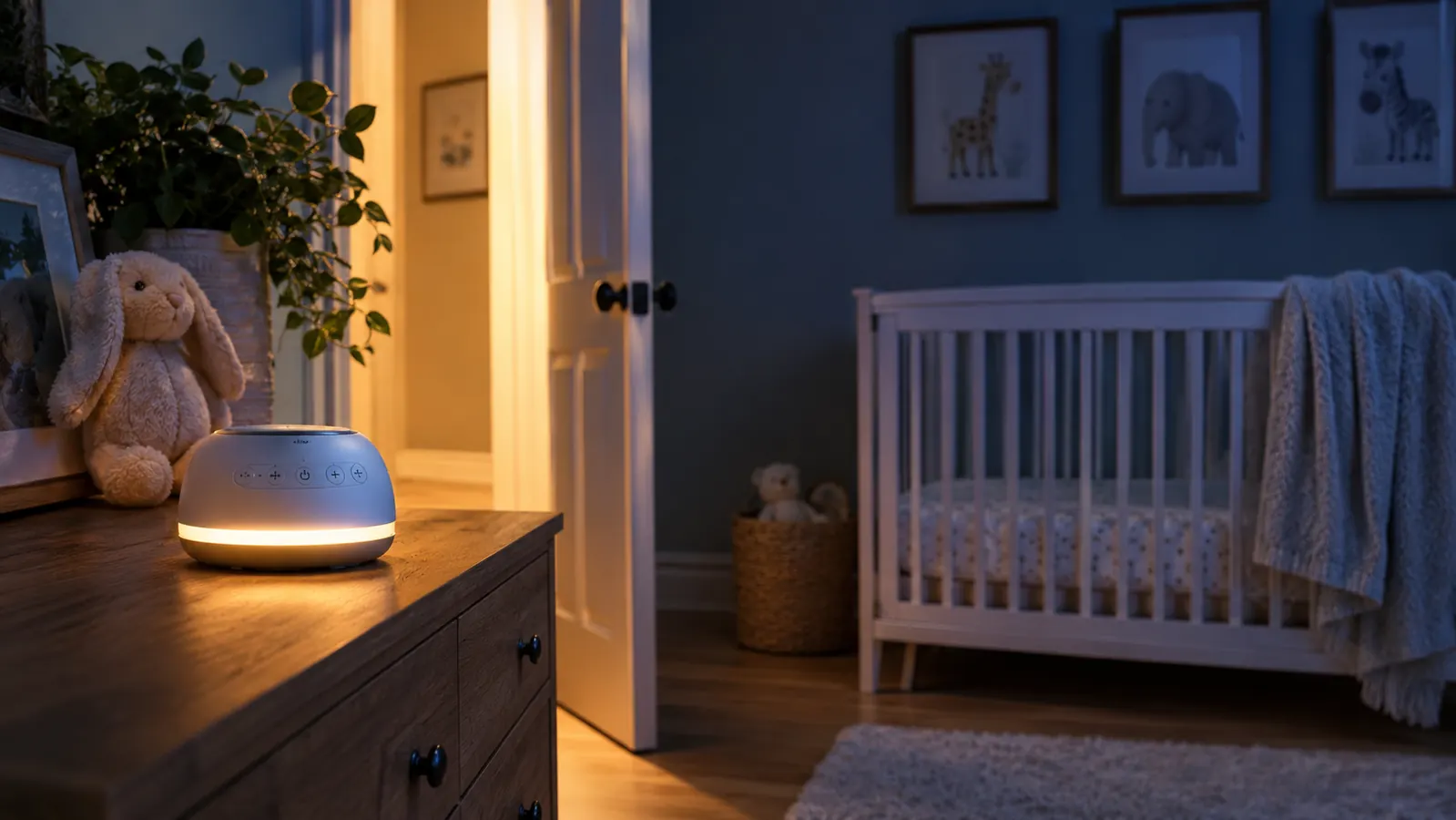
The first night in the crib is the one that gets you. Not the birth, not the drive home, not the two week checkup. It is the night you walk out of the nursery, close the door behind you, and realize the baby is now in a different room from you for the first time in his life.
That was mid August for us. Milo was six months old, he had spent every night until then in a bassinet beside my bed, and I spent the first two weeks of crib nights sitting on the hall floor listening to the monitor like it was a radio broadcast of something terrible happening. The Hatch Baby had been on the dresser across the room since he was six weeks old, doing nap duty only. That month it became the thing that held our whole evening together, and it has stayed on that dresser, in that same spot, ever since. I want to tell you what nine months of daily use actually looks like, because the reviews I read before I bought it were mostly written by people three days in.
The Quick Verdict
The most useful piece of nursery gear I own for building a routine, and the most annoying one to set up. If you want a light and a sound you can change from your phone at 2 a.m. without opening a door, it earns its place. If you just want white noise, a much cheaper machine does that job.
Amazon Check Today's Price →The one thing on our dresser that has not moved since February
Nine months of naps, one crib transition, and one routine built around Pink Noise and a dim warm light. Current price and the full listing are on Amazon.
Amazon Check Today's Price on Amazon →How I've Used It
I ordered the Hatch Baby in January, about three weeks before my due date, in one big Amazon order that also had a monitor, an audio monitor, a swaddle and a blackout blind in it. I had never owned a sound machine before. Nobody handed one down. I picked this one because every list I read put it at the top and I was too pregnant to comparison shop properly.
It came out of the box, went onto the nursery dresser, and has never moved. The dresser is across the room from the crib, roughly seven feet. The cord runs down behind it. That is the entire installation. The part that took time was the app setup: the Hatch Sleep app needs Wi-Fi and an account, which took me one nap to get through and one more nap to understand, because the scheduling interface is not obvious the first time you see it.
For the first stretch, weeks six through roughly six months, the Hatch was a nap-only device. Milo slept nights in the bassinet in our room, and the bassinet did not have a sound machine next to it. Naps happened in the crib in the nursery from about two weeks old, so the Hatch ran for naps and then went quiet. It was mid August, when he moved to the crib for nights, that it started running all night. Now it runs for every nap and every night, which is somewhere around fourteen hours a day.
The settings have barely changed. Pink Noise, low volume, dim warm light. I have fiddled with the schedule in the app more than I have fiddled with the sound. I want to be honest about that: this is not a gadget I interact with constantly. It is a device that turns on and stays on, and that is most of its value.
The Routine Reset That Made It Worth the Money
The first two weeks in the crib were rough. I am not going to dress that up. Milo woke more, I woke more, and there was a stretch where I was in that room four times a night doing the thing where you pat a mattress and whisper nonsense at two in the morning.
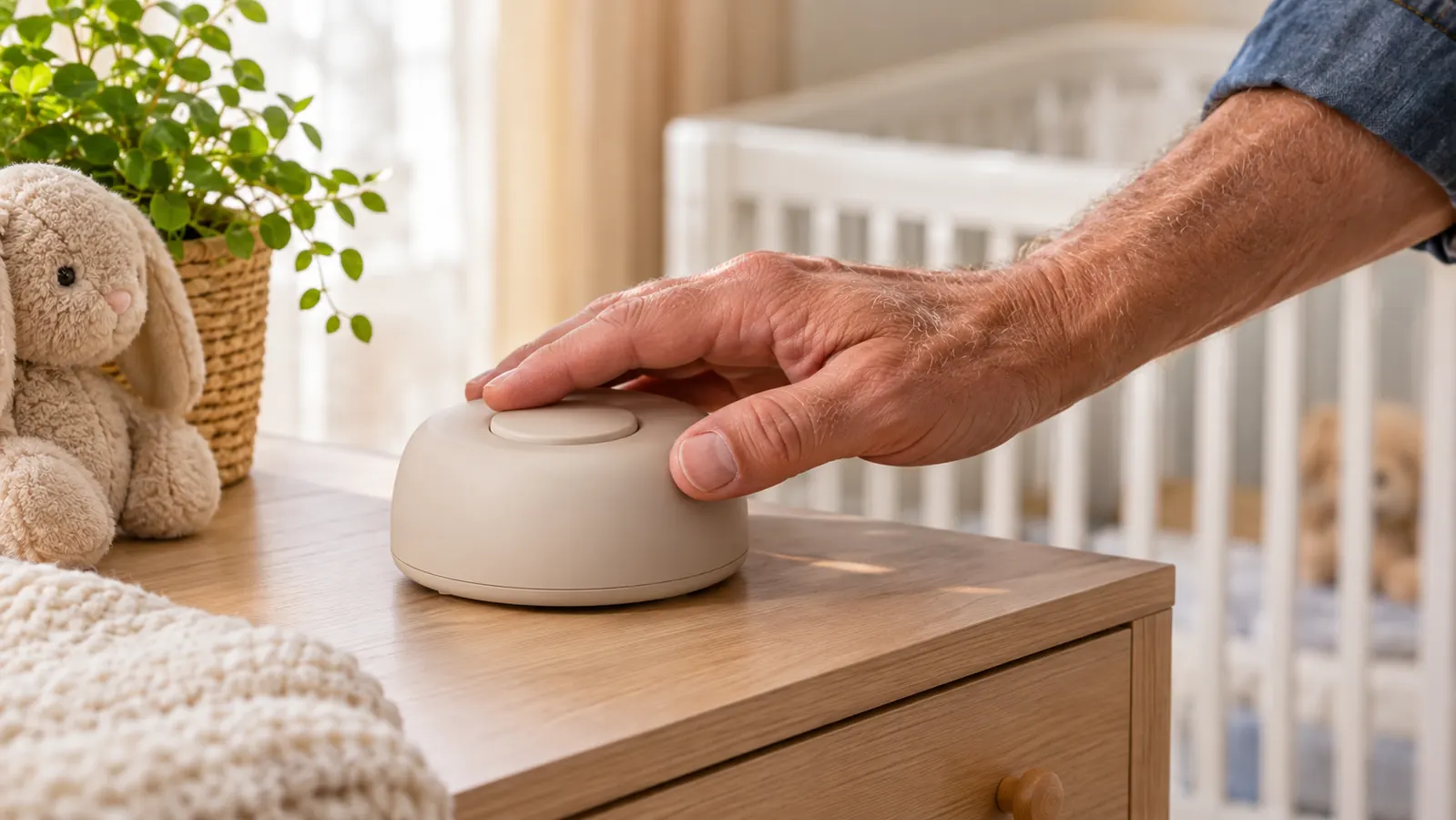
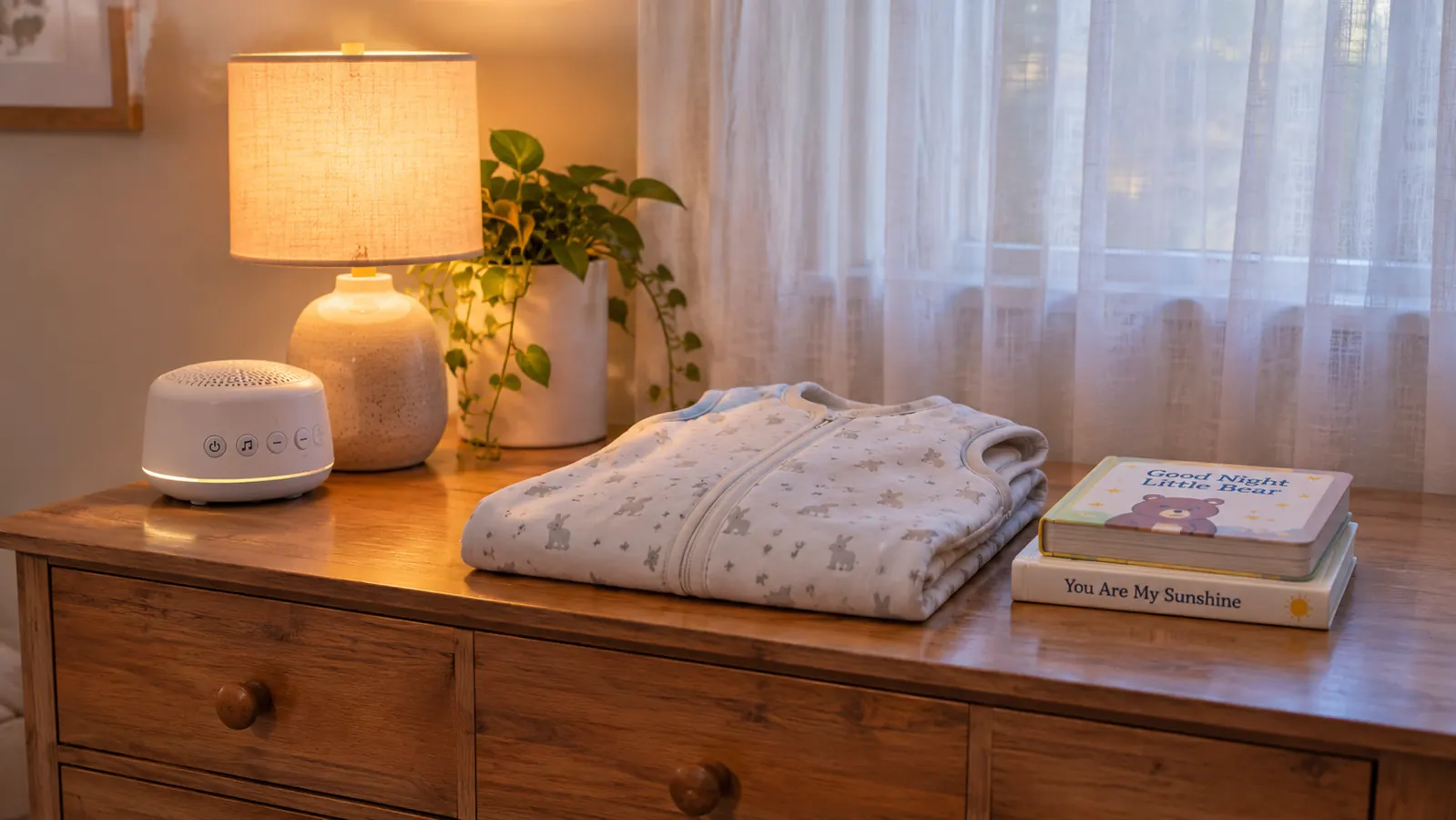
What pulled us out of it was not a product, it was a sequence. I built one routine and I put it on the Hatch: feed, one book, the light dims, Pink Noise comes on, baby goes down awake. Same four beats, every night, in the same order, at roughly the same time. After about ten days the dimming light started doing something to me as much as to him. My shoulders would come down when the room went warm and low, because I had taught myself that this was the part of the day where the work stopped.
That is the honest case for this thing. It is not that it puts a baby to sleep. It does not, and no machine does, and I would be careful with anyone who tells you otherwise. It is that it makes one part of the day identical to the day before, and babies seem to settle into that. Milo still wakes some nights. Some weeks are good and some weeks he is up at four and we are all just surviving until morning. But the bedtime hour itself is no longer a negotiation.
The dimming light started doing something to me as much as to him. My shoulders would come down when the room went warm and low.
What the App Does Well, and What It Does Not
The app is where the whole thing lives. You set the light, you set the sound, you build the schedule. Sounds include Pink Noise and Heartbeat, plus stories and other content. You can save favorites and control it from anywhere, which sounds like a gimmick until you are downstairs and the noise has stopped and you can turn it back on from the kitchen without climbing the stairs.
The scheduling is the best part. Once you have a routine built, the Hatch runs it without you. That matters on the nights when you are holding a baby who has just fallen asleep in your arms and you cannot reach the dresser. It also matters at 6 a.m. when the light is supposed to come up slowly and you are face down in a pillow.
Here is what I do not love. Setup requires Wi-Fi and an account, which means one more password, one more thing that can lose its connection, and one more app on my phone. There is no battery, so it is corded only. That is a real limitation, and it means the Hatch does not come on trips with us. It stays home. On our one weekend away in July it stayed on the dresser in an empty house, and I did not miss it as much as I expected, which tells you something about how much of the benefit is the routine rather than the object.
The other thing to know is the premium content. It comes with three months of Hatch+ included, and it does not auto renew. I let it end and I pay nothing now. The Pink Noise, the heartbeat, the light and the schedules all still work. I did not find the extra content worth adding, but I want you to know it goes away so you are not surprised when it does.
Pink Noise, a dim warm light, and a schedule that runs itself
If your bedtime hour is different every night, the routine builder is the part that earns this. Full listing and current price on Amazon.
Amazon See the Hatch Baby on Amazon →Where It Sits in Our Actual Setup
Two things live on that dresser and one thing lives on the far wall shelf. The Hatch is on the dresser, seven feet from the crib. The video monitor camera is on the same dresser, cord tucked down behind it, never on the crib and never within reach. The audio monitor baby unit is on the far wall shelf, more than three feet from the crib, and its night light stays off because the Hatch is the light in that room.
That last part matters more than it sounds like it should. Two light sources in one small room at night is one too many, and I turned the audio monitor's light off in the first week. If you are building a nursery, decide which device owns the light. In ours it is the Hatch.
For naps, the Hatch is on, the blind is down, the video monitor is on in whatever room I am in. For nights, all of it is on and I am listening to the audio monitor on my nightstand, not watching a screen. I moved to audio at night on purpose, because I was staring at the video feed and not sleeping. The Hatch is part of a system, not a standalone fix, and the system took us a couple of months to get right.
What Months of Use Did to My Opinion
The first month, I thought it was overpriced and overhyped. It was a white noise machine with a light on it, and a cheaper one would have made the same noise. I would have told you so at a birthday party.
The thing that changed my mind was not the sound. It was the schedule. Once the routine was built and running, and once the crib transition hit and the routine was the only structure left in our lives, the Hatch stopped being a gadget and became the thing that told me what part of the day it was. Nine months in, I can hear the Pink Noise through the monitor and know that the room behind that door is doing what it did yesterday.
That is worth something, and it is also not worth everything. I want to be careful here because I read a lot of reviews that made this sound like a sleep solution, and it is not one. Milo is nine months old and he still wakes. Some of that is teeth, some of it is a developmental leap, some of it is just being a baby. The Hatch did not fix that and no device will. What it did is give us a reliable last hour of the evening, and I do not take that for granted.
Nine months on the same dresser, still running the same routine
Nothing about it has broken, drifted or needed replacing. If you are building a nursery and want the routine piece settled, this is where I would spend the money.
Amazon Check Today's Price on Amazon →What I Liked
- The routine builder runs on its own, so bedtime looks the same every night without you doing anything
- Controlling the light and sound from the app from another room is genuinely useful at 2 a.m.
- Pink Noise and Heartbeat are both on the device without the premium subscription
- Dim warm light is adjustable and low enough that it does not wake the room
- Nine months of daily use with no malfunction, no drift and no parts to replace
Where It Falls Short
- App and Wi-Fi are required for setup, which means an account and a connection you now maintain
- No battery, so it is corded and cannot travel without an outlet
- It is expensive next to a basic white noise machine that makes the same sound
- The included Hatch+ content ends after three months and does not renew on its own
- It does not make a baby sleep, and the marketing around sleep products in general can set that expectation
Who This Is For
This is for the parent who wants one device to own both the light and the sound in the nursery, and who will actually use the schedule. If you are the kind of person who will build a routine once and let it run, the Hatch Baby is the most useful version of that idea I have handled. It is also for a two story house where you cannot see the nursery door from the kitchen. Being able to turn the sound back on without climbing the stairs has saved more of my evenings than I can count.
It also suits a parent transitioning a baby from a bedside bassinet into a crib in another room, because that is exactly when a repeatable bedtime sequence starts doing real work. And it suits anyone who wants a light in the nursery that is dim and warm rather than a lamp with a cloth over it.
Who Should Skip It
Skip it if you only want white noise. A basic white noise machine makes noise and costs far less and needs no app and no Wi-Fi and no account. I have never owned one, so I will not pretend to compare them night for night, but the job of making a continuous shushing sound does not require an app and I would not tell you otherwise to justify my own purchase.
Skip it if you travel a lot and want the same sound in a hotel or at a relative's house. There is no battery. It is corded, and it stays home. Skip it too if a second app and a second account in your life sounds exhausting rather than convenient, because the setup is real work and the device will not run without it. And skip it if you are hoping for a sleep fix. It is a routine and light and sound tool. It is not a medical device, it does not prevent anything, and a baby who is waking for a feed or for teeth will keep waking.
One more for the cautious crowd, and I count myself in it: nothing about a sound machine replaces safe sleep. Milo has always slept on his back, on a firm flat mattress, with nothing loose in the crib. No blanket, no pillow, no toy, no positioner, ever. If you are unsure about anything sleep related, ask your pediatrician. Dr. Bell has answered more of my questions than any product listing, and the guidance she gives is the guidance I follow.
If the routine piece is the part you are missing
Current price, the full listing, and the three month Hatch+ detail are all on Amazon. I would read the listing before you buy, not just this review.
Amazon See Today's Price on Amazon →