
Nobody hands you a bedtime routine. You come home from the hospital with a baby, a folder of discharge papers, and a nurse's reminder to feed him often, and then it is 9:40 at night and you are standing in a bright room trying to figure out why he is crying and why you are crying too. With my son Milo, born in February, the first six weeks were mostly me guessing. Feed him, jiggle him, sing the same three songs badly, lay him down, pick him up again. The guessing is what wore me out. Not the waking. The not knowing what came next.
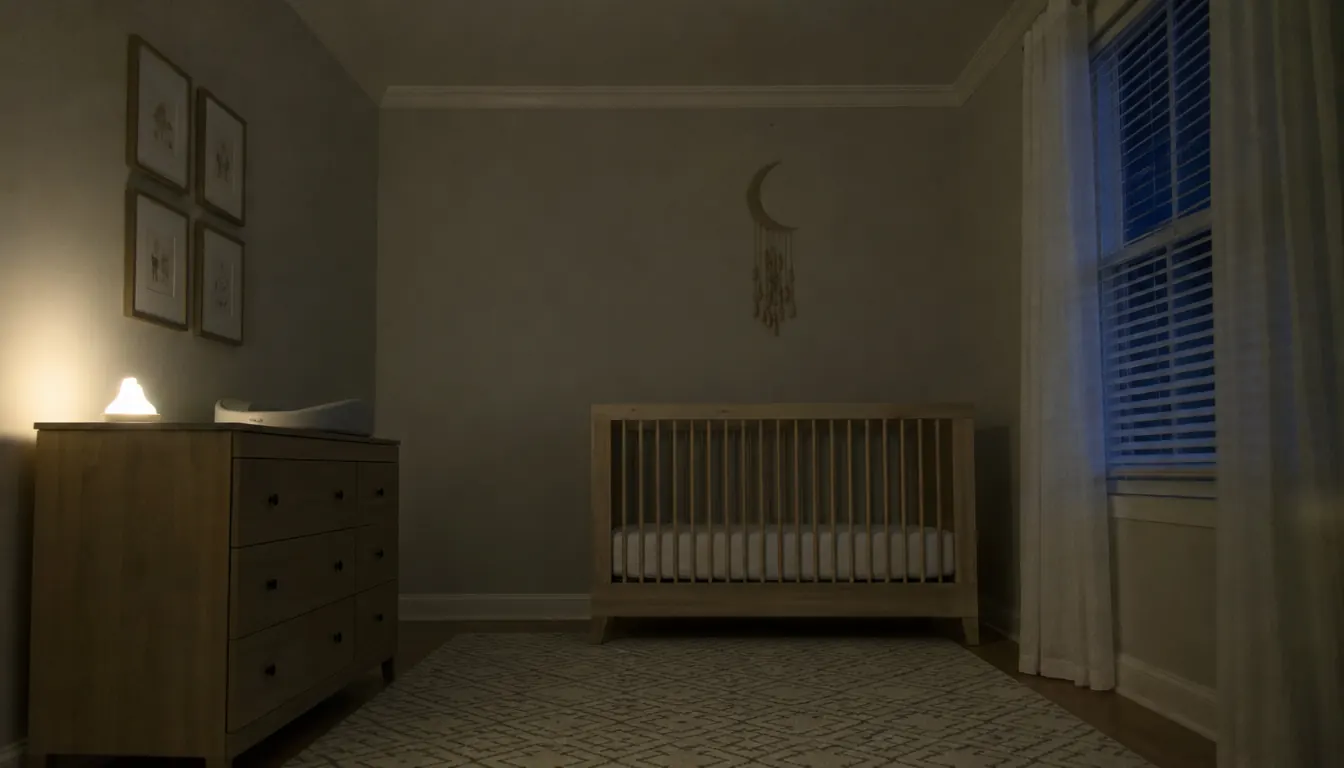
What fixed it was not a gadget. It was an order. Four things, same sequence, every night and every nap. The Hatch Baby sound machine and night light is the piece that makes the order easy to hold, because it carries two of the four steps on its own. The light comes down and the Pink Noise comes on while I am still holding him. Ours has sat on the nursery dresser for months now, about 7 feet from the crib. It has not made Milo sleep through the night and I am not going to tell you it will make yours either. What it did was give the evening a shape, which turned out to be the part I could actually control.
The step that runs itself, so you can hold the baby instead
Set one light and one sound in the Hatch Baby app and the same setting greets you every night. Corded with a power adapter, about 4.2 by 4.2 by 6.61 inches, small enough to live on a dresser top and far enough to stay out of the crib.
Amazon Check Today's Price on Amazon →Step 1: Set everything up in daylight, not at 9 p.m. with a baby on your shoulder
The worst possible time to learn a new app is with a fussy baby in one arm and a phone held at a bad angle in the other. Do the setup on a Saturday morning while the baby naps and the house is quiet. The Hatch Baby runs through the Hatch Sleep app, so it needs your Wi-Fi and a few minutes of patience, and neither of those things exists in your house at bedtime.
What I actually did, in order: plugged the power adapter into the wall, set the machine on the dresser, opened the app, connected it, and built two favorites. One is the night setting. The other is the nap setting, which is the same sound at the same volume with the light left a little higher, because a nap does not need to be as dark as 3 a.m. does. Both favorites took about ninety seconds each once the app was talking to the machine.
Two honest notes about setup. The Hatch Baby is corded, with no battery, so wherever you put it is where it lives, and it stays home when we travel. It also ships with 3 months of Hatch+, which does not auto renew. Mine ran out and I pay nothing now, and the routine works exactly the same, because Pink Noise and the light are not sitting behind that paywall. The extra content is extra. It was never the foundation.
Step 2: Pick one sound and one light level, then stop adjusting them
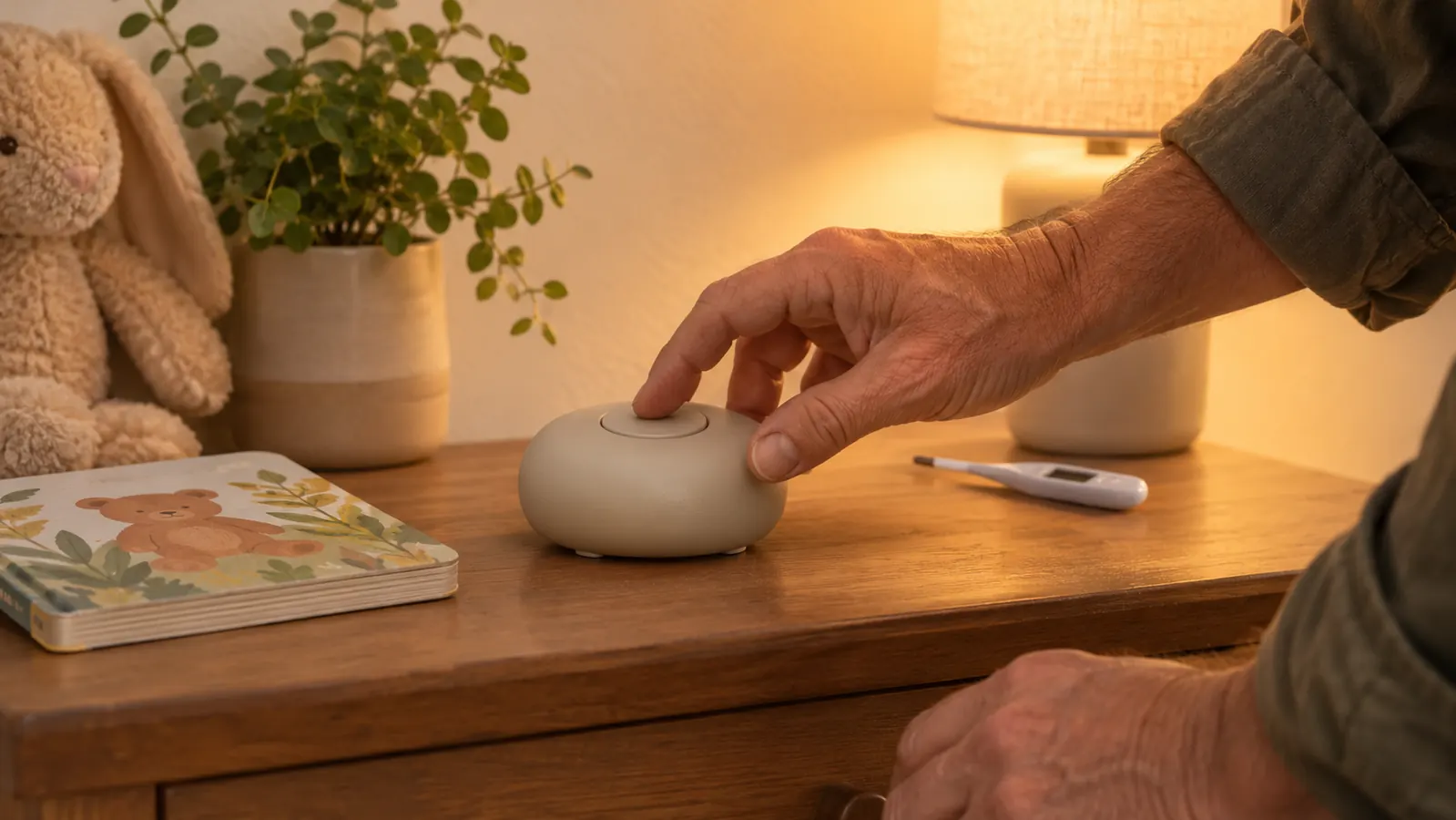
Choices feel like progress at 8 p.m. and like a trap at 2 a.m. The Hatch Baby offers a long list of sounds, including Pink Noise and Heartbeat, and it is genuinely tempting to audition all of them like you are picking a ringtone. Do not. Pick one. Ours has been Pink Noise since the first week and it has never changed. Now the sound itself is the cue, and I do not have to think about it.
On volume, low is the point. Ours sits near the bottom of the range, well under the level of a normal conversation, and the machine lives across the room on the dresser rather than beside his head. The volume got set in the app on day one and has not moved since, which is the only reason it has stayed low. A tired person will absolutely turn things up at midnight given the chance.
The light matters more than I expected it to. A dim warm glow is enough to feed and change by, and it is a completely different experience from flipping on the overhead and waking both of us all the way up. When the light comes down a notch, that is the signal. A routine is mostly a stack of signals, and this one is the last one before the crib.
Step 3: Lock the order of the four things and defend it
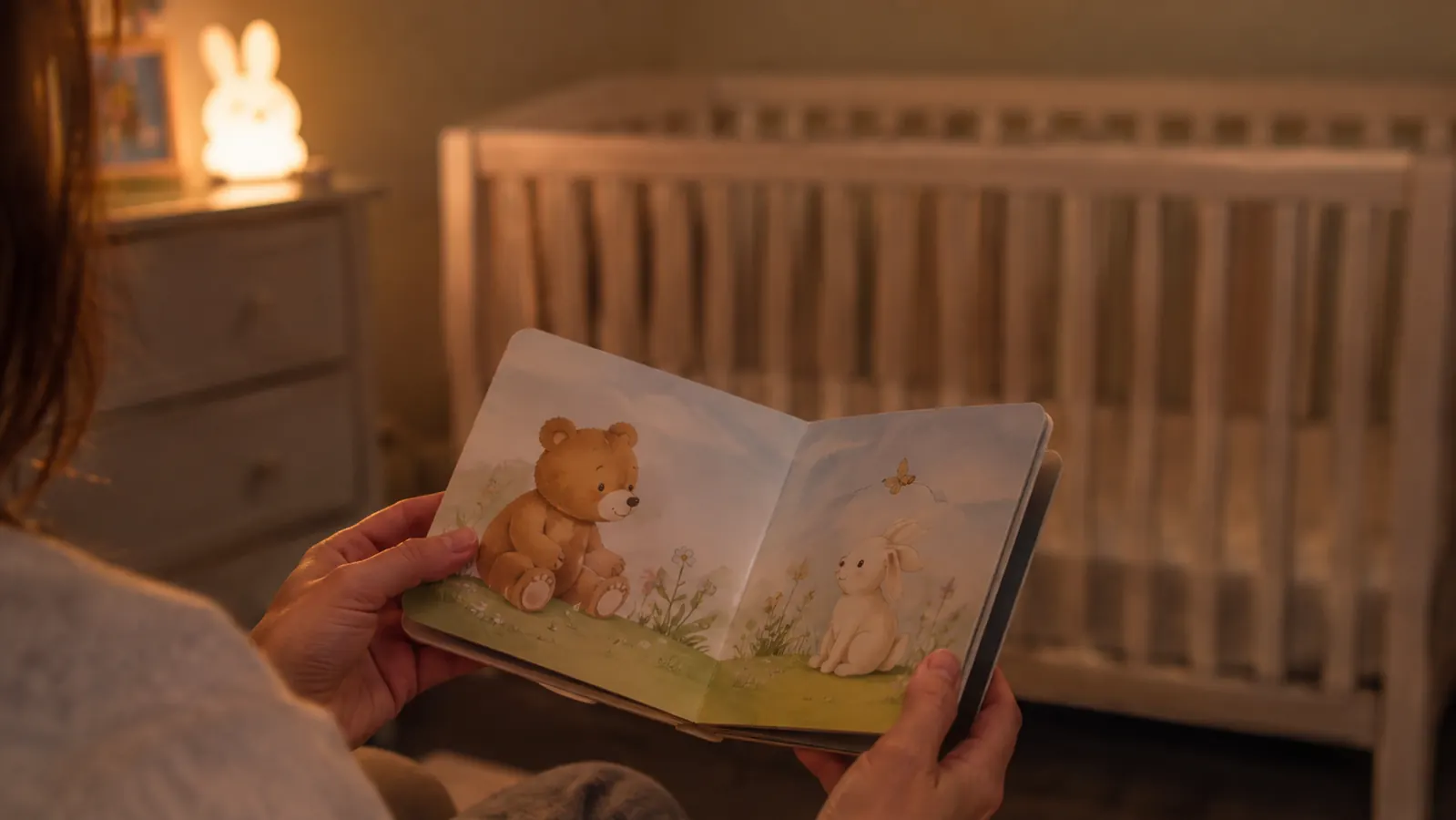
The order in our house is feed, one book, light down, sound on, then down awake. That is the whole routine. Four moves, maybe fifteen minutes. Not a bath every night, because a bath every single night with a nine month old is a construction project, and a routine you skip when you are tired is not a routine at all.
The reason the order matters more than the contents is that a baby picks up sequence long before he picks up words. The book does not have to be good. Ours is a board book about a bear and I could recite it with my eyes shut, and some nights I do. What matters is that the book always comes after the feed and before the light goes down, so the light means the book is finished and sleep is the next thing.
Nate does the same four moves in the same order when he puts Milo down, and that was not automatic. We wrote the order on a sticky note and stuck it inside the nursery door for a month. Mostly for him, partly for me at 2 a.m. when my brain stops producing sentences. Two caregivers running the identical sequence is worth more than either one of us being clever about it.
Two weeks in, the light coming down was the thing that settled him. The sound was the thing that covered the house noise. I had those two backwards in my head the entire time.
Step 4: Put it where you can reach it and the cord cannot
The Hatch Baby sits on the dresser across from the crib, about 7 feet away, and it has never moved. The cord runs down behind the dresser and along the baseboard. It has never been on the crib, never clipped to a rail, never anywhere a standing baby could reach. This is the one part of our setup I am strict about, and it is not a complaint about the design. It is just how cords work in a room where a baby sleeps.
Reach matters too. You want to start the thing without crossing a rug in the dark with a baby on your shoulder, which is why the app earns its keep for me. I start the favorite from my phone in the hallway and the sound is already going when we walk in. Seven feet sounds close until you are doing it at 3 a.m. with one free hand.
Keep the crib itself empty. On his back, on a firm flat mattress, nothing loose in the crib, no blanket, no pillow, no stuffed animal, and no machine. The Hatch Baby belongs on the dresser and the dresser belongs across the room. If you take one thing out of this whole article, take that one and skip the rest.
Step 5: Give it two weeks and stop scoring it night by night
Milo napped in the nursery crib from about two weeks old, but nights were in a bassinet beside my bed until he was six months old, in mid August. So the first week of nights in the crib was a new room, a new distance, and a new machine all at once. The first two weeks were rough. Not dangerous, not unusual, just rough. He woke and I walked across that hall a great many times.
By the third week the order had sunk in, and I could see which part was doing the work. It was the light coming down. I learned that by accident one evening when the internet was out and the app would not load, so I dimmed the lamp by hand and it still worked, only late and clumsy and not the same. The machine is not the routine. The machine is what makes me consistent, and consistent turns out to be most of it.
Do not grade it night by night. Run the same order, the same sound, the same light, the same four moves for two weeks, and then look at the shape of the whole stretch instead of Tuesday. Milo is nine months old and he still wakes some nights. I have stopped treating that as a verdict on the routine. It is a bad night. It is not a failed system, and a sound machine was never going to be the thing that ended waking.
What Else Helps
The Hatch Baby is one piece. Three other things made the routine hold together, and one of them only mattered for the first few months.
The room itself came before any of it. Our nursery has one east facing window, and by 7 a.m. the sun was landing right on the crib wall, so naps in that room were short and I spent weeks assuming it was him. It was the room. The blackout blind went up the week before Milo was born and stays up all year, and the change in how long a nap runs when the sun is not on the wall is the least dramatic improvement in this entire article and also one of the biggest.
In the newborn months, the Love to Dream Swaddle UP did more for bedtime than anything else, mostly by being first. Milo reached 8 pounds at about two weeks, so he started in it in late February and wore it for nights and naps until mid May, when he was about 13 weeks and starting to show signs of rolling. We stopped that week, because you stop swaddling at the first signs of rolling. After that he went into a plain sleeveless cotton sleep sack and was fine. The swaddle is not part of our routine anymore and I am not going to pretend it is.
The two monitors are not part of the bedtime routine, and I want to be clear about that before anyone buys one expecting it to be. The VTech DM221 stays plugged in on the far wall shelf with its night light off, because the Hatch Baby is the light in that room. The HelloBaby is the camera, on the dresser, and at night its parent unit sits on Nate's nightstand. What the audio monitor really changed was me. I was staring at a video screen at night instead of sleeping, so now I hear him and read the sound LEDs, and only Nate's screen shows video. That is a routine improvement even though it has nothing to do with the baby.
One more, on the room itself. The Swaddle UP is rated for rooms 68 to 75 degrees, and that range is a decent target for a nursery in general. We keep a cheap thermometer on the shelf because the hall thermostat and the monitor both read a degree or two off and I stopped trusting either one. Dress the baby for the room rather than for a blanket you plan to add, because there is no blanket.
And the safe sleep basics do not bend for any of this gear. On his back, on a firm flat surface, nothing loose in the crib. No product in this article prevents SIDS or treats any medical problem, and the Hatch Baby is a sound machine and a night light, not a medical device. If your baby's sleep or breathing ever worries you, that is a call to your pediatrician. It is not a call to me, and it is certainly not a call to a sound machine.
Four moves in the routine. This is the one that keeps them in order
Set the light and the Pink Noise once and the same setting is waiting every night, whether you are the one walking in or your partner is. Corded, sits out of reach on a dresser, and it stays home when you travel.
Amazon Check Today's Price on Amazon →